
Ka Statue of King Hor
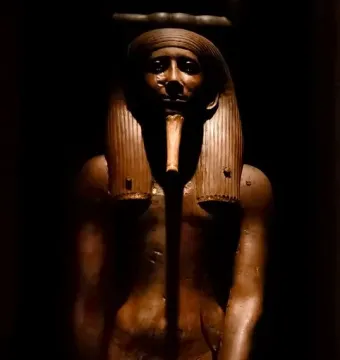
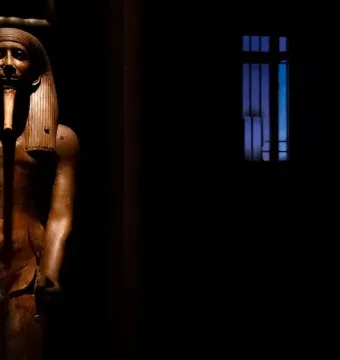
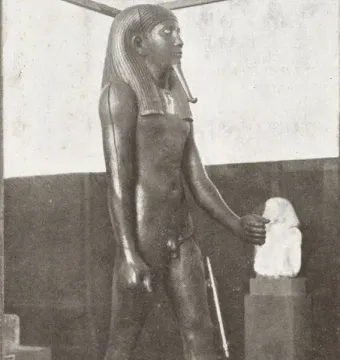
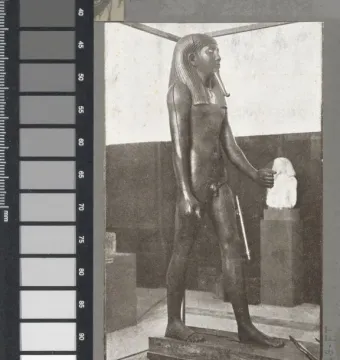
The Ka statue of King Hor is a wooden sculpture from the Thirteenth Dynasty of Ancient Egypt, dating to around 1730 BCE. It was discovered in 1894 in the tomb of King Hor at Dahshur during excavations led by Jacques de Morgan. The statue is now displayed in the Egyptian Museum in Cairo and is regarded as one of the great works of Egyptian art. Made of wood and originally covered with a thin layer of stucco, it shows the king with a wide collar and the Ka symbol on his head. The figure once held a staff and scepter, and it was found inside a wooden naos in the tomb chamber.
September 2023 © Amira Ghandour · CC BY-SA 4.0
September 2023 © Amira Ghandour · CC BY-SA 4.0
© Rijksmuseum · CC0
© Rijksmuseum · CC0
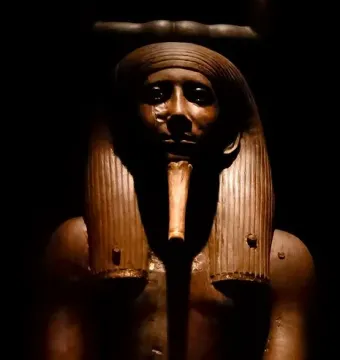
September 2023 © Amira Ghandour · CC BY-SA 4.0
Identification | |
| Title | Ka statue of King Hor |
| Inventory number | JE 30948 |
| Subject | King Hor I Auibra |
| Type | Ka statue |
Historical context | |
| Date | 13th Dynasty, around 1750 BCE |
| Culture | Ancient Egyptian |
Creator | |
| Excavators | Jacques de Morgan, Georges Legrain, and Gustave Jequier |
Discovery and provenance | |
| Original tomb design | Probably designed for a simple courtier and later adapted for Hor I's remains and funerary equipment |
| Identification of Hor I | Known chiefly from this discovery, especially two alabaster jars at the mouth of the shaft bearing his name |
| Condition at discovery | Covered with a layer of gray paint that disintegrated on contact with air |
| Find position | Found lying on its back inside a wooden naos at the rear of the tomb, in one of the rooms of the funerary temple complex |
| Tomb contents | Sarcophagus with the ruler's body, a wooden shrine, and the statue of his ka |
| Tomb type | Pit tomb |
| Discovery location | King Hor's tomb at Dahshur, near the northeast corner of the pyramid of Amenemhat III |
| Discovery date | 1894 |
Physical characteristics | |
| Height | 135 cm |
| Total height | 170 cm with pedestal and ka symbol |
Materials | |
| Material | Wood |
| Surface treatment | Originally covered with stucco, and probably gilded; both are now lost |
| Naos material | Wood |
| Naos decoration | Formerly partly covered with gold leaf and decorated with carved flowers and hieroglyphic inscriptions naming the king; these are now lost |
Appearance | |
| Facial features | Long curled beard |
| Uraeus | None |
| Attributes held | Originally held a staff in the left hand and a sceptre in the right |
| Eyes | Inlaid eyes of rock crystal and quartz |
| Neck ornament | Broad collar around the neck |
| Head attribute | Ka sign made of two raised arms on the wig |
| Clothing | Originally fitted with a short skirt and probably a traditional white kilt; only traces of a painted belt remain |
| Current appearance | The figure is now naked and stripped of some original regalia, though key features remain |
| Headgear | Tripartite wig |
Iconography and meaning | |
| Representation | The statue shows the king as his ka rather than as a portrait of the pharaoh |
| Religious meaning | In ancient Egyptian belief, the ka was the most important of several souls or spirits and animated the visible form chosen by the ba |
| Iconographic interpretation | The wig and long curled beard allude to the divine nature of the represented subject; the ka sign identifies him as his ka |
| Portrait status | Not a portrait of the pharaoh |
Location and ownership | |
| Current location | Egyptian Museum, Cairo |
| Museum status | On display |
History and restoration | |
| Reason for tomb placement | The cult temple was never built, likely because the king reigned only very briefly, so the statue was placed in the burial chamber |
| Preservation | The statue now appears stripped of its clothing and some original regalia |
| Museum history | After arriving at the museum, it disappeared in 1902 and was later found hidden in a secluded place by a worker who had damaged it and feared punishment |
| Interpretation | Dorothea Arnold suggested it may once have been made for the king's cult temple |
| Associated offerings | Many offerings were found around the statue |
Significance | |
| Art historical status | Considered one of the major works of Egyptian art |
| Scholarly reception | Appears in many publications on Ancient Egyptian art |
| Stylistic assessment | W. Stevenson Smith described it as idealized naturalism |
| Stylistic comparison | Compared with other royal sculptures of the late Twelfth Dynasty, which often show an elderly face, Hor is depicted as youthful and idealized |
| Historical circumstance | Hor I apparently died unexpectedly |