
Capitoline Wolf in Timișoara
Capitoline Wolf is a statue in Timișoara’s Victory Square, between the Metropolitan Cathedral and the Palace of Culture. It is a copy of the famous Capitoline Wolf and was donated by the municipality of Rome in 1926 as a symbol of Latinity, celebrating Roman Empire culture. The monument depicts the legend of Rome’s founders, Romulus and Remus, suckled by a she-wolf, and is listed as a historical monument under code TM-III-m-B-06314. The statue was unveiled on 23 April 1926 before a large crowd and was later removed during World War II. It was restored to its place during Nicolae Ceaușescu’s time.
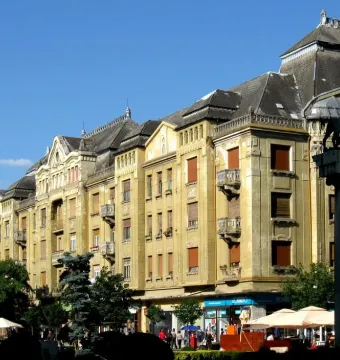
June 2011 © Turbojet · CC BY-SA 3.0
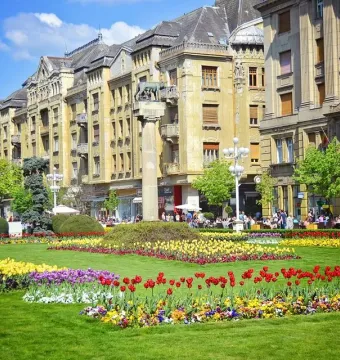
April 2015 © Gratziela Ciortuz · CC BY-SA 4.0
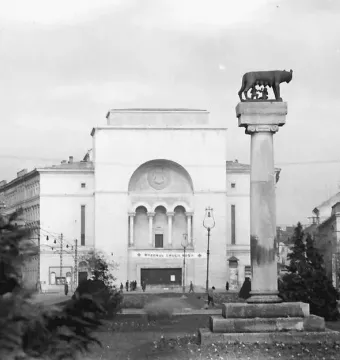
April 1937 © Willy Pragher · CC BY 3.0 de
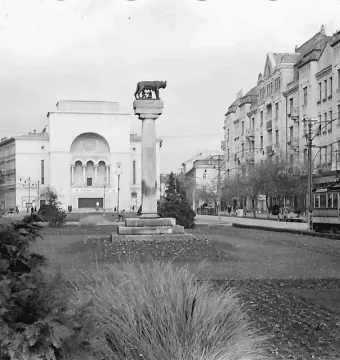
© Willy Pragher · CC BY 4.0
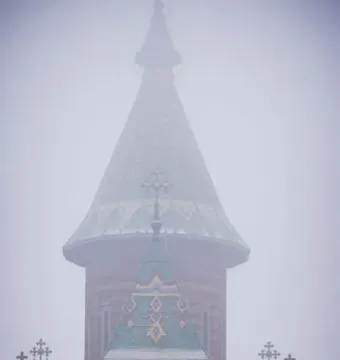
January 2017 © Corneliu Adrian · CC BY-SA 4.0
Identification | |
| Title | Capitoline Wolf in Timișoara |
| Type | Monument; statue |
| Original-language name | Die Kapitolinische Wölfin |
| Subject | The Capitoline Wolf, an exact replica of the Lupa Capitolina in Rome |
Historical context | |
| Installation date | 23 April 1926 |
| Unveiling date | 23 April 1926 (St. George's Day) |
| Unveiling attendance | 10,000 people |
| First monument status | Described as the first monument unveiled in Timișoara after the creation of Greater Romania |
Creator | |
| Presented by | Giulio Cesare Codecà, Italian consular agent in Timișoara |
Discovery and provenance | |
| Donor | The city municipality of Rome |
| Gift date | 1926 |
| Gift context | One of four copies of the Capitoline Wolf donated to Romania by the municipality of Rome and the Government of Italy between 1906 and 1926 as a sign of recognition of the Latin origin of the Romanian people and the ties between the two peoples |
| Recipient city | Timișoara |
| Other Romanian recipient cities | Bucharest, Cluj-Napoca, and Chișinău |
Physical characteristics | |
| Column height | 4.96 meters |
Materials | |
| Material | Bronze |
Appearance | |
| Depicted scene | The she-wolf suckles Romulus and Remus |
Location and ownership | |
| Location | Piața Victoriei, Timișoara, Romania |
| Placement | In the city center, between the Opera House and the Cathedral of the Three Holy Hierarchs / Metropolitan Cathedral, on a square in the I. District Cetate |
| Current status | Listed as a protected monument; inscribed in the list of historical monuments under code TM-III-m-B-06314 |
| Current location | The center of Timișoara |
Iconography and meaning | |
| Symbolic meaning | A symbol of Latinity and of the shared Romance roots of the Italian and Romanian peoples |
| Interpretation | Glorifies the Roman Empire culture of that period |
| Dedication | In memory of the Latin ethnic kinship between the two peoples |
History and restoration | |
| Removal | Temporarily removed from the city center during World War II after the Second Vienna Award, amid protests against Fascist Italy's support for Hungary's territorial claims |
| Reinstallation | Reinstalled during Nicolae Ceaușescu's time after local officials decided to put the statue back in the center of Timișoara |
| Lighting | Received artistic night illumination in December 2012 |
Significance | |
| Cultural significance | One of the landmarks of the city |