
Daedalus and Icarus
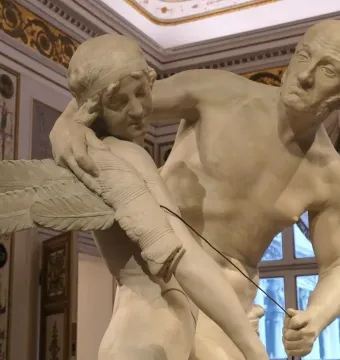
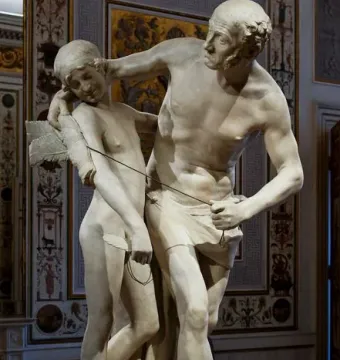
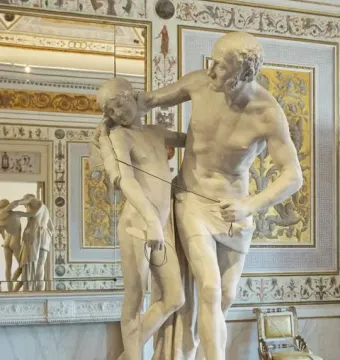
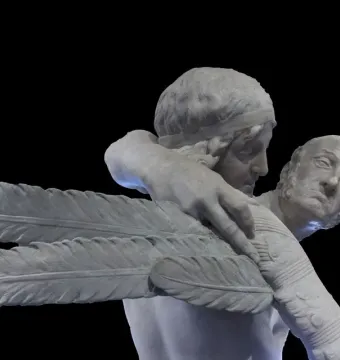
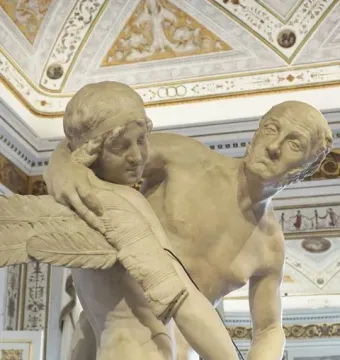
Daedalus and Icarus is one of Canova’s early sculptures, combining idealization and realism. Based on the myth of the escape from Crete, it shows the two figures with wax wings. The composition contrasts the elderly Daedalus, pushed forward and marked by senility, with the youthful Icarus, who represents ideal beauty and bends backward to balance the weight of both bodies. Placed symmetrically in opposite positions, the figures create a chiastic arrangement, with curved lines of force forming an X-like structure. Though each figure is unstable alone, the whole achieves balance through opposition and also creates a strong play of light and shadow. The sculpture is preserved at the Museo Correr in Venice.
December 2018 © SottoAlLibro · CC BY-SA 4.0
November 2017 © Livioandronico2013 · CC BY-SA 4.0
August 2019 © Armin Kleiner · CC BY-SA 4.0
© Antonio Canova · CC BY-SA 4.0
August 2019 © Armin Kleiner · CC BY-SA 4.0
Identification | |
| Title | Daedalus and Icarus |
| Original title | Dédale et Icare |
| Italian title | Dedalo e Icaro |
| Spanish title | Dédalo e Ícaro |
| Type | Sculptural group |
Creator | |
| Artist | Antonio Canova |
Historical context | |
| Date created | 1779 |
| Early career status | One of Canova's first sculptures and his first major work |
| Commissioned by | Pietro Vettor Pisani, nobleman and procurator of San Marco |
| Payment | 100 sequins |
| Public reception | Exhibited and greatly admired by the Venetian public during the Feast of the Ascension |
| Significance of payment | Allowed Canova to cover the expenses of his intended study trip to Rome |
Iconography and meaning | |
| Narrative emphasis | Daedalus is shown as reflecting on the test while trying to ensure its success and his son's safety |
| Depicted scene | Daedalus, the elderly father, fastens the first part of the wing while looking worriedly at Icarus, who smiles joyfully and excitedly at the adventure |
| Subject | Daedalus and Icarus escaping from Crete by making wax and feather wings to fly away |
Physical characteristics | |
| Height | 2.20 m |
Materials | |
| Material | Marble |
| Original plaster model | Preserved at the Gipsoteca canoviana in Possagno |
Style / artistic qualities | |
| Style | Combines idealization and realism; still shows Baroque naturalism and movement |
| Idealization | Search for ideal beauty in the composition |
| Realism | Realistic anatomical details and details of objects; Daedalus is rendered with realistic face and body, while Icarus is idealized |
| Composition | Symmetrical chiastic composition with the figures placed in opposite positions around a central axis; curved lines of force form an X-like shape |
| Balance | The figures are individually unstable but together achieve equilibrium through the distribution of weight |
| Light and shadow | Strong contrast of light and shadow created by the two bodies |
| Figure of Daedalus | The elderly Daedalus leans forward and is characterized by senility in decline |
| Figure of Icarus | The young Icarus arches backward and represents ideal beauty |
Location and ownership | |
| Current location | Museo Correr, Venice |
| Plaster model location | Gipsoteca canoviana, Possagno |
Significance | |
| Historical significance | Considered a major early success for the young Canova |