
Lady of Galera
Lady of Galera is a Phoenician alabaster figurine found in the Tútugi Necropolis near Galera, in the province of Granada. It comes from Tomb No. 20 in Area I and is dated to the 4th century BC. The sculpture probably represents the goddess Astarte. It shows a seated woman between two sphinxes, holding a bowl and pouring liquid through two holes in her breasts. Its robust shapes suggest Mesopotamian influence, while the stylized clothing and hair reflect Egyptian influence. Because of its sacred character, it passed through several generations before its final burial as part of a funerary offering. It is now exhibited at the National Archaeological Museum of Spain in Madrid.
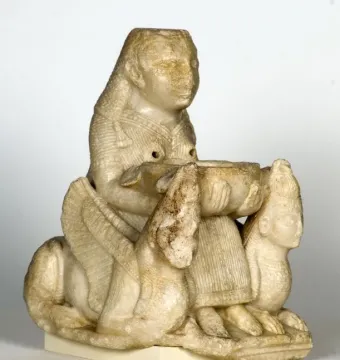
November 2016 © Ángel M. Felicísimo · CC BY-SA 2.0
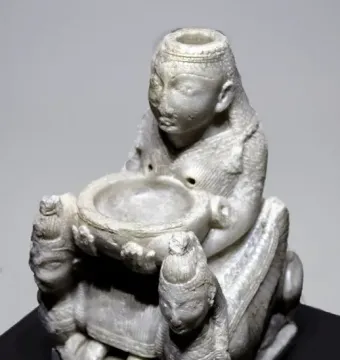
January 2015 © Amfeli · CC BY 4.0
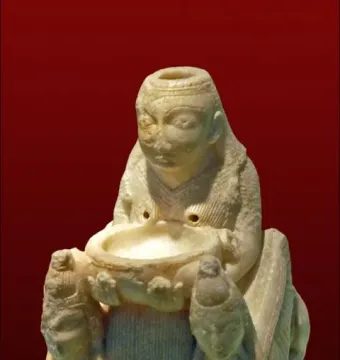
· CC BY 2.0
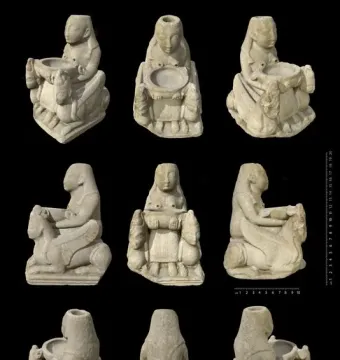
December 2019 © Amfeli · CC BY 4.0
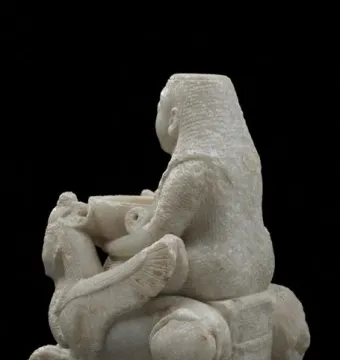
0700 © Relanzón, Santiago (photo) · CC BY-SA 4.0
Identification | |
| Name | Lady of Galera |
| Type | female figurine |
| Alternative name | Dama de Galera |
Historical context | |
| Culture | Phoenician |
| Date | 7th century BC, probably |
Creator | |
| Origin/manufacture | Phoenician, probably |
Physical characteristics | |
| Height | 18.5 cm |
Materials | |
| Material | alabaster |
Appearance | |
| Head element | another vessel or possibly a ring on top of the head |
| Breast openings | two openings in the breasts that released liquid into the bowl |
| Flanking figures | two winged sphinxes, possibly also interpreted as throne arms |
| Object held | offering bowl held with both forearms and hands |
| Hair | braided locks falling to the shoulders, with Egyptian influence |
| Garment | pleated floor-length dress with a border; bare feet visible |
| Figure type | idealized seated female figure |
| Pose | seated between two winged sphinxes |
Iconography and meaning | |
| Depicted deity | probably the Near Eastern goddess Astarte |
| Function of bowl | received liquid, probably milk or water, from the figure's breasts |
| Interpretation | a sacred object, perhaps more than a high priestess or fertility goddess |
| Stylistic influences | Egyptian influence in the hair and costume; robust form recalls Mesopotamian statues |
Discovery and provenance | |
| Discovery date | 1916 |
| Findspot | Galera, formerly Tutugi, Granada province, Spain |
| Archaeological context | Tútugi necropolis, near Cerro del Real, near Galera |
| Associated burial | tomb no. 20, zone I |
| Related artifacts | Greek, Iberian, Phoenician, and terracotta and alabaster vases, ornaments, weapons, furniture, and figurines from nearby tombs |
| Related artifact dating | dated between the 7th and 3rd centuries BC; some source fragments say between the 3rd and 6th centuries BC |
History and restoration | |
| Later use and burial | likely used by several generations as a sacred object before final burial as a funerary offering |
Location and ownership | |
| Current location | Museo Arqueológico Nacional de España, Madrid |