
Lenormant Athena
Lenormant Athena is a small Greek statuette created in the 1st century CE from Pentelic marble. Found in 1859 near the Pnyx Hill in Athens, it was identified a year later by François Lenormant as a reduced copy of Phidias’ Athena Parthenos, and it takes its nickname from him. The 41-centimeter-high work is of great art-historical importance because it preserves details of Athena, the shield reliefs, and the base that were previously known only from written sources. Athena stands calmly in an upright pose, wearing an Attic peplos, with her left arm resting on her shield. The statue remains unfinished, and today it is kept in the National Archaeological Museum, Athens, inventory number 128.
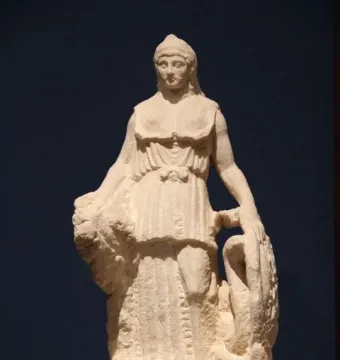
July 2016 © Gary Todd · CC0
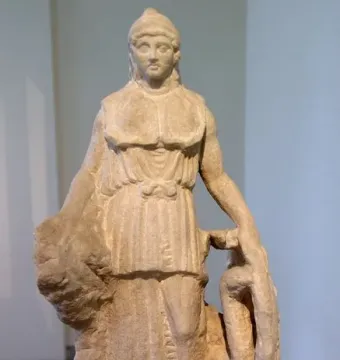
© Unknown (After Phidias' Athena Parthenos) · CC BY-SA 2.5
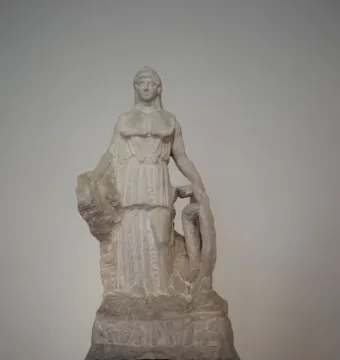
April 2018 © George E. Koronaios · CC BY-SA 4.0
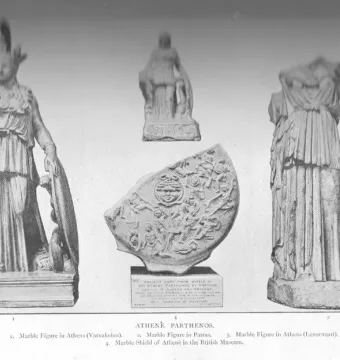
1903 © Unknown authorUnknown author · Public domain
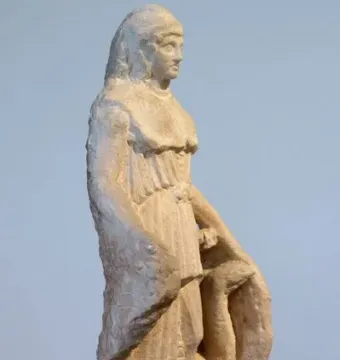
© Unknown (After Phidias' Athena Parthenos) · CC BY-SA 2.5
Identification | |
| Title | Lenormant Athena |
| Type | Small Greek statuette |
| Alternative title | Athena Lenormant |
| Identified as | A small copy of Phidias' Athena Parthenos |
Historical context | |
| Identification date | 1860 |
| Date of creation | 1st century CE |
Discovery and provenance | |
| Name origin | Named after François Lenormant |
| Initial placement after discovery | Placed in a corner of the Temple of Hephaestus (then known as the Theseion), apparently because it was considered an unremarkable find |
| Discovery location | Near the Pnyx Hill in Athens |
| Discovery date | 1859 |
Creator | |
| Identified by | François Lenormant |
Physical characteristics | |
| Right hand position | Resting on a support |
| Height | 41 cm |
| Back condition | Unfinished |
| Condition | Unfinished |
| Depicted figure | Athena |
| Pose | Standing calmly and gracefully, with her weight on her right leg and her left leg relaxed/bent |
| Clothing | Attic peplos |
| Left arm position | Resting on her shield |
| Base decoration | Birth of Pandora |
Materials | |
| Marble source | Quarried from Mount Pentelicus |
| Material | Pentelic marble |
Iconography and meaning | |
| Possible missing attribute | Nike, probably held in her right hand, is not preserved |
| Shield decoration | Amazonomachy |
Location and ownership | |
| Current location | National Archaeological Museum, Athens |
| Inventory number | 128 |
Significance | |
| Art-historical significance | Of great art-historical importance because it shows the appearance of Phidias' statue, including the reliefs on the shield and the base, which were previously known only from literary sources |