
Acrobat from Osuna
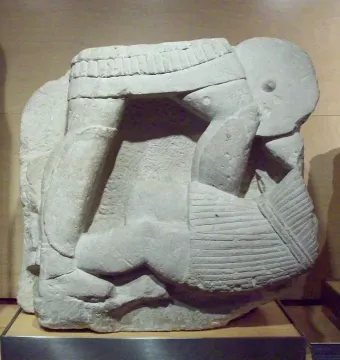
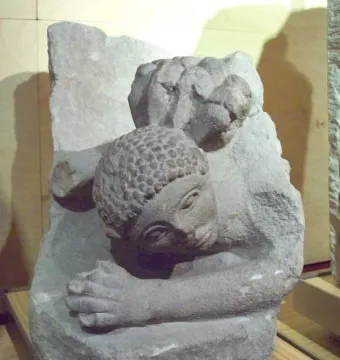
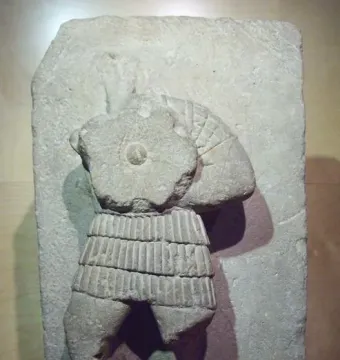
Acrobat from Osuna is a sculpture dating from the late period noted in the source text and is now on display at the Museo Arqueológico Nacional de España in Madrid, with inventory number 38427. It formed part of an Iberian monument from the Iron Age II. The high relief measures 78 cm in height, 38 cm in width, and 25 cm in depth. It shows a man in an acrobatic pose, thought to have played a role in a game or funerary rite. His legs are bent so that his feet touch his head, while the arms used for support are almost entirely lost. He appears to wear a short pleated skirt and footwear tied near the ankles with straps, showing strong Roman influence.
April 2018 © Jl FilpoC · CC BY 4.0
August 2016 © Ángel M. Felicísimo · CC BY 2.0
· CC BY-SA 3.0
· CC BY-SA 3.0
· CC BY-SA 3.0
Identification | |
| Title | Acrobat from Osuna |
| Type | High relief sculpture |
| French title | L'acrobate d'Osuna |
Historical context | |
| Date | Late 4th century BC; one fragmentary source gives only "late of the" and is incomplete |
| Period | Iron Age II |
| Culture | Iberian |
| Art period | Iberian period |
Creator | |
| Creator | Unknown |
Discovery and provenance | |
| Original setting | Part of an Iberian monument |
| Originally belonged to | An Iberian monument of the Iron Age |
| Discovery place | Osuna, at the site of the ancient city of Urso |
| Origin | From the ancient Iberian city of Urso, near Seville |
Location and ownership | |
| Current location | National Archaeological Museum of Madrid, Spain |
| Inventory number | 38427 |
| Exhibited with | Various other Iberian artworks / sculptures from the Iberian period |
Physical characteristics | |
| Dimensions | 78 cm high × 38 cm wide × 25 cm deep |
Appearance | |
| Depicted figure | A man |
| Pose | Acrobatic pose with bent legs and feet reaching his head |
| Arms | Almost completely missing; they were used for support |
| Clothing | Short pleated skirt with strong Roman influence |
| Footwear | Shoes tied near the ankle with straps |
Materials | |
| Material | Not specified in the fragment |
Iconography and meaning | |
| Possible interpretation | May represent a role in a game or a funerary rite |