
Standing Fauness
Standing Fauness is a white marble sculpture measuring 70.1 × 44.7 × 38.4 cm, created in 1910 by Auguste Rodin. The work presents several creative motifs, including the image of a bewildered woman condemned among a crowd of sinners in a setting that suggests the lust of hell. It also symbolizes the close relationship between Rodin and the Duchess of Marlborough. This connection is reflected in an inscription on the left side of the base that reads, “A Miss señorita Gladys Deacon/ Auguste Rodin.”
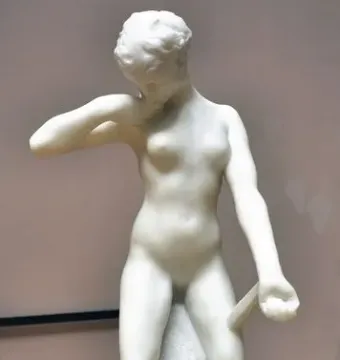
January 2008 © Vassil · CC0
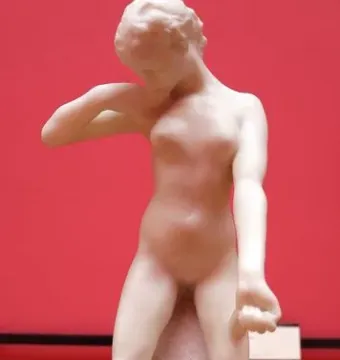
March 2017 © Sailko · CC BY 3.0
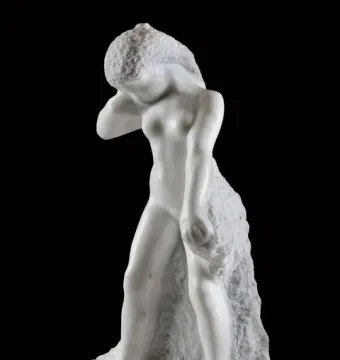
June 2016 © Museo Soumaya · Public domain
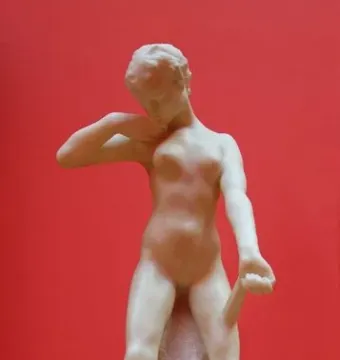
© Auguste Rodin · CC BY-SA 4.0
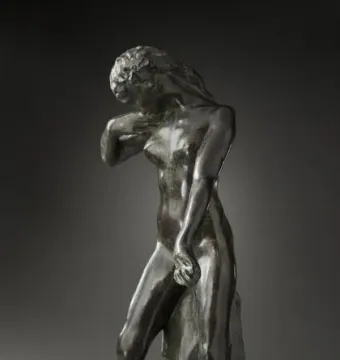
© Auguste Rodin (France, 1840-1917) · Public domain
Identification | |
| Title | Standing Female Faun |
| Spanish title | La Faunesa de Pie; Faunesa de Pie |
Creator | |
| Artist | Auguste Rodin |
Historical context | |
| Date created | 1910 |
Materials | |
| Material | white marble |
Physical characteristics | |
| Dimensions | 70.1 × 44.7 × 38.4 cm |
Iconography and meaning | |
| Iconographic theme | The lust of hell |
| Associated sculptural group | The tympanum group on The Gates of Hell |
| Interpretation | Represents the conception of a hybrid creature combining human and ram characteristics; Rodin conceived the work as representing a soul within the sculptural group on the tympanum of the Gates of Hell; The piece symbolizes the close relationship between Rodin and the Duchess of Marlborough |
| Theme | A set of women representing the lust of hell (the lust of the inferno) |
| Subject depicted | A woman condemned and bewildered among a crowd of sinners |
| Subject / representation | A being of hybrid nature, half human and half ram |
Discovery and provenance | |
| Associated person | Gladys Deacon |
History and restoration | |
| Signature / inscription | Signed on the left-hand side of the base: "A Miss Gladys Deacon / Auguste Rodin"; "A Miss señorita Gladys Deacon/ Auguste Rodin" |
| Signature location | Left-hand side of the base |
| Signature significance | The signature testifies to the close relationship between the artist and Gladys Deacon |
| Supporting evidence for interpretation | An inscription on the left side of the base |
| Inscription text | "A Miss Gladys Deacon / Auguste Rodin"; "A Miss señorita Gladys Deacon/ Auguste Rodin" |
| Person mentioned in inscription | Gladys Deacon |
| Artist named in inscription | Auguste Rodin |