
Lady of Ibiza
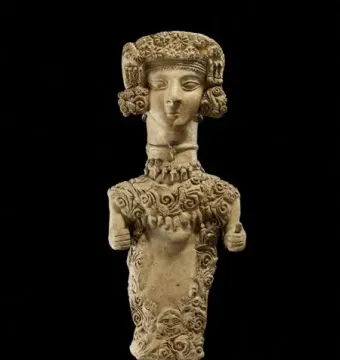
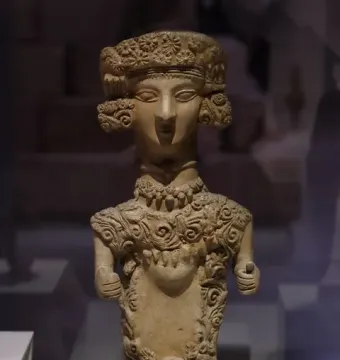
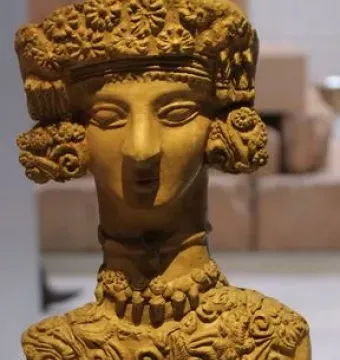
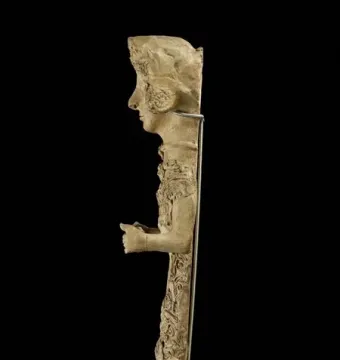
Lady of Ibiza is a 47-centimeter-tall clay figure from the Punic period of the Balearic Islands. It was found in the necropolis at Puig des Molins on the island of Ibiza, in the Mediterranean. Made in a mold, it has a cavity in the back, a feature shared by the other known “ladies” and thought to have held relics, offerings, or funerary ashes. The sculpture is generally understood as a representation of a Carthaginian goddess, probably Tanit, associated with the Phoenician goddess Astarte. Its dress and jewelry are richly ornamented. The work is currently exhibited at the National Archaeological Museum of Spain in Madrid.
0400 © Relanzón, Santiago (photo) · CC BY-SA 4.0
January 2022 © Malopez 21 · CC BY-SA 4.0
April 2014 © Miguel Hermoso Cuesta · CC BY-SA 4.0
0400 © Relanzón, Santiago (photo) · CC BY-SA 4.0
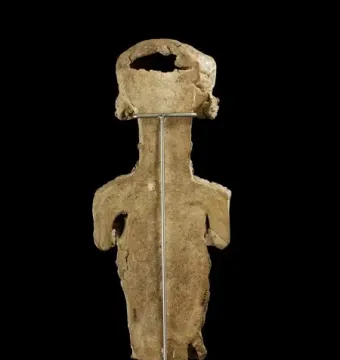
0400 © Relanzón, Santiago (photo) · CC BY-SA 4.0
Identification | |
| Title | Lady of Ibiza |
| Original name | La Dama de Ibiza |
| Type | Clay figure |
Historical context | |
| Date | 3rd century BC |
| Historical context | Created during the Punic occupation of the Balearic archipelago |
Creator | |
| Technique | Made in a mold; the arms with the hands held forward were added afterward |
Discovery and provenance | |
| Findspot | Puig des Molins necropolis, Ibiza, Balearic Islands |
| Discovery context | Found during excavations in a necropolis |
Physical characteristics | |
| Height | 47 cm |
| Back cavity | Hollow back cavity |
Materials | |
| Material | Clay |
Appearance | |
| Decoration | Richly ornamented clothing and jewelry; garment decorated with plant motifs and a Gorgoneion; diadem decorated with rosettes |
Iconography and meaning | |
| Subject | Probably a Carthaginian goddess, possibly Tanit |
| Religious association | Linked to the Phoenician goddess Astarte |
| Cavity interpretation | Possibly used to contain relics, funerary offerings, or the ashes of the deceased; possibly for hanging |
Location and ownership | |
| Current location | National Archaeological Museum of Spain, Madrid |
| Inventory number | 1923/60/541 |
History and restoration | |
| Related finds | Numerous similar figures were found in the graves of the Punic occupation phase of the Puig des Molins necropolis; most of the figures found there are representations of goddesses |
| Artistic influence | Possible influence from Greek art via Magna Graecia; compared with Sicilian and Carthaginian prototypes |
Significance | |
| Artistic significance | Important example of Punic pottery |