
Bust of Francesco I d'Este
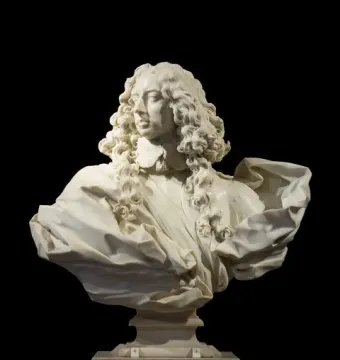
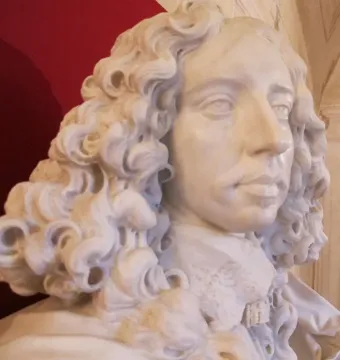
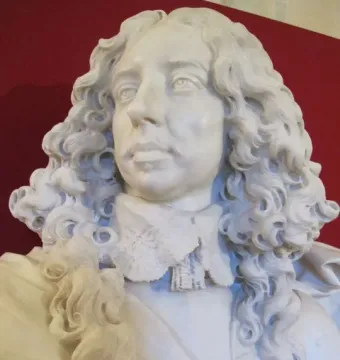
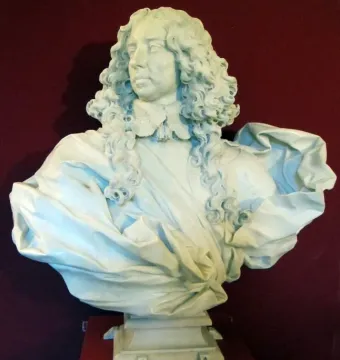
The Bust of Francesco I d'Este is a sculptural portrait by the Italian artist Gian Lorenzo Bernini, created between 1650 and 1652. Made of marble, it depicts Francesco I d’Este, Duke of Modena. The work is noted for its noble facial expression, extensive drapery, and voluminous hair, features that reflect Bernini’s characteristic way of portraying “absolute monarchs” with elevated, oblique poses. The sculpture is currently in the Estense Museum in Modena, Italy. In 1660, Francesco Stringa painted the bust surrounded by several objects, and that painting is now in the Minneapolis Institute of Art.
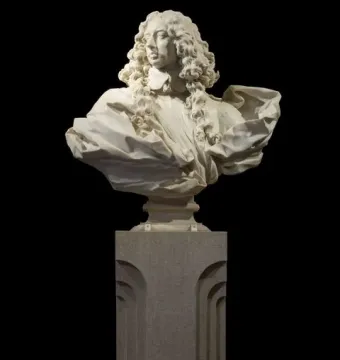
April 2024 © FennMT · CC0
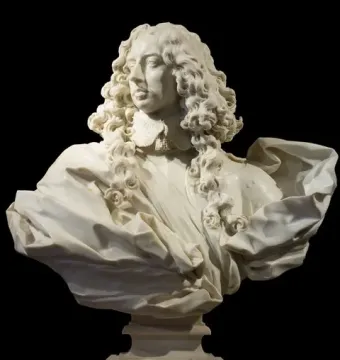
April 2024 © FennMT · CC0
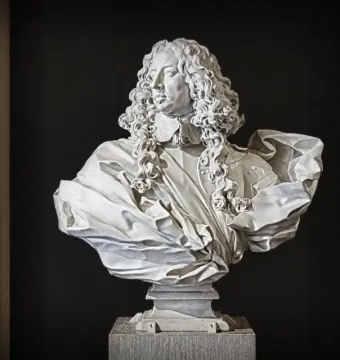
September 2016 © Annovi.frizio · CC BY-SA 4.0
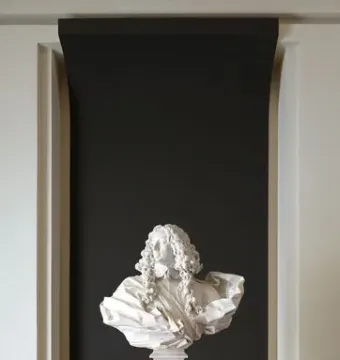
© Sailko · CC BY-SA 4.0
April 2024 © FennMT · CC0
© sailko · CC BY-SA 3.0
© sailko · CC BY-SA 3.0
© sailko · CC BY-SA 3.0
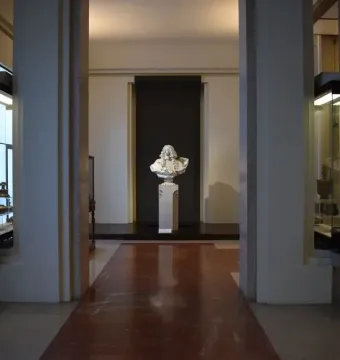
August 2016 © Nicola Quirico · CC BY-SA 4.0
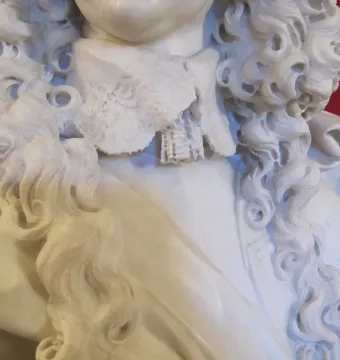
© sailko · CC BY-SA 3.0
Identification | |
| Title | Bust of Francesco I d'Este |
| Type | Portrait bust |
Creator | |
| Artist | Gian Lorenzo Bernini |
| Artist nationality | Italian |
Historical context | |
| Date | 1650–1652; completion in September 1651; commissioning in August 1650 |
| Commissioned by | Francesco I d'Este |
| Commission context | Alessandro Algardi was initially considered, but the idea was rejected |
| Historical context | The bust was made shortly after Bernini completed the Fountain of the Four Rivers in Rome |
| Historical reception | The work had notable success already at the time of its creation |
Discovery and provenance | |
| Arrival in Modena | November 1651 |
| Payment amount | 3,000 scudi |
| Reception by the patron | Francesco I d'Este was so impressed by the bust that he paid Bernini 3,000 scudi |
| Modeling source | Based on painted likenesses rather than direct sittings |
| Transport | The completed work was transported in a crate on a cart to Modena |
| Artist's reaction to working without seeing the model | Bernini said making a bust without ever having seen the model was 'nearly impossible' / 'almost impossible' and vowed not to work that way again; he apologized in advance for any possible lack of resemblance |
| Additional reference information requested | More portraits of the duke and the exact measurements of his height and shoulder width |
| Portrait sources used | Paintings by Justus Sustermans and Jean Boulanger, sent from Modena specifically for Bernini to use |
| Payment comparison | The sum matched the amount Bernini had recently received from Pope Innocent X for the Fountain of the Four Rivers |
Materials | |
| Material | Marble |
Physical characteristics | |
| Height | 106 cm |
| Condition | Preserved |
Appearance | |
| Pose | Turning to the right; shown in the act of turning; supposedly superior pose |
| Facial expression | Noble but detached |
| Drapery | Extensive drapery / extended draperies |
| Hair | Luxurious locks of hair / voluminous hair |
| Composition and emphasis | Bernini emphasized secondary elements such as the wig, the ruff, and especially the mantle/cloak |
| Mantle or cloak effect | The mantle/cloak hides the cut of the chest, torso, and arms and gives the marble mass an appearance of lightness; it appears to float in the air according to Jérôme Lalande |
Iconography and meaning | |
| Subject | Francesco I d'Este, Duke of Modena and Reggio |
| Stylistic interpretation | Often considered emblematic of Bernini's representation of 'absolute monarchs,' portrayed in superior poses and seemingly oblivious to their surroundings |
Location and ownership | |
| Current location | Museo Estense / Galleria Estense / Estense Gallery, Modena, Italy |
History and restoration | |
| Related artwork | A painting of the bust, surrounded by various objects |
| Related artwork artist | Francesco Stringa |
| Related artwork date | Late 1660s |
| Related artwork location | Minneapolis Institute of Art |
Significance | |
| Later influence | The same details were reused about a decade later for the bust of Louis XIV of France at Versailles |
Other | |
| Quoted source | Jérôme Lalande, Voyage d'un Français en Italie, fait dans les années 1765 et 1766 |