
Madama Lucrezia
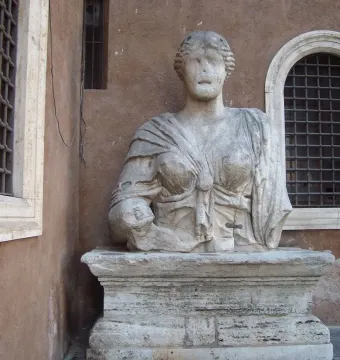
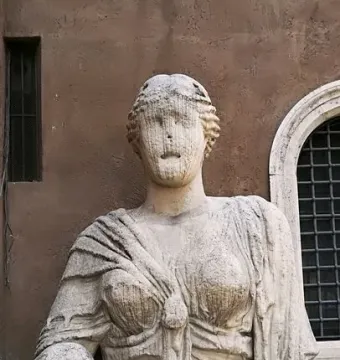
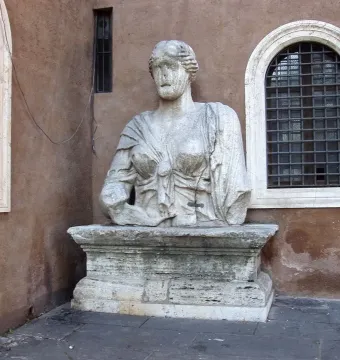
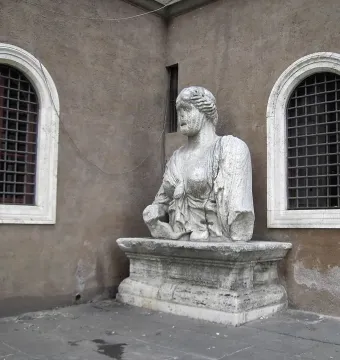
Madama Lucrezia is one of the six talking statues of Rome and the only one representing a female figure. It is a colossal Roman bust, about 3 metres high, now mounted on a base between Palazzo Venezia and the Church of San Marco in the square that bears its name. The identity of the figure is uncertain, though the most accepted hypothesis identifies it as the goddess Isis, or one of her priestesses, due to the knot in the dress over the chest, a feature associated with that cult. The statue was donated by Lucrezia d’Alagno, lover of Alfonso II of Naples, and its name may be linked to her.
© Galzu · Public domain
September 2018 © Girolamocannat · CC BY-SA 4.0
January 2005 © Stendhal55 · CC BY-SA 4.0
June 2005 © Lalupa · Public domain
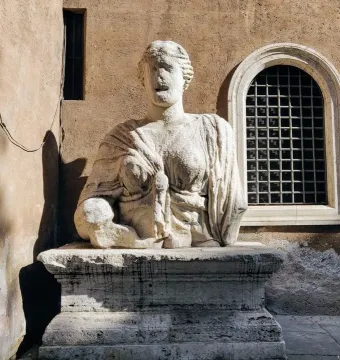
July 2019 © Camelia.boban · CC BY-SA 4.0
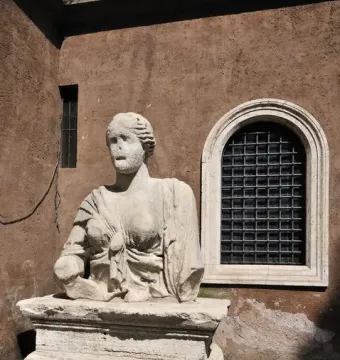
© Vlad Lesnov · CC BY 3.0
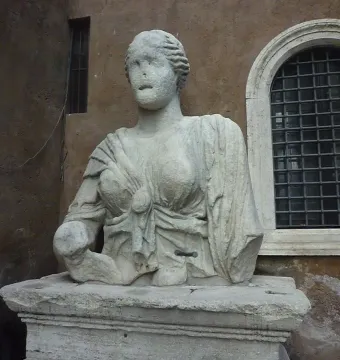
© Pierfelice Licitra · CC BY 3.0
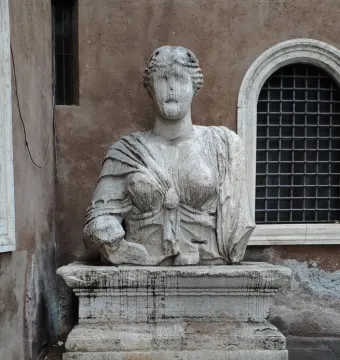
November 2019 © Kaga tau · CC BY-SA 4.0
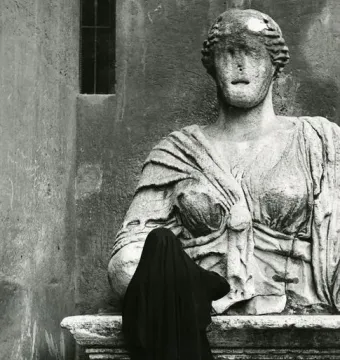
© Paolo Monti · CC BY-SA 4.0
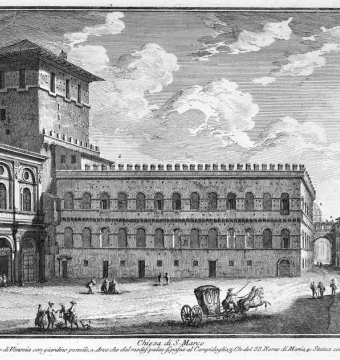
1803 © Giuseppe Vasi · Public domain
Identification | |
| Title | Madama Lucrezia |
| Distinctive status | The only female talking statue among the six talking statues of Rome |
| Original-language name | Madama Lugrezzia (Romanesco) |
| Type | Colossal Roman bust; one of the talking statues of Rome |
Historical context | |
| Date | Roman era; placed there in the 1590s |
Creator | |
| Installed by | Cardinal Lorenzo Cybo de Mari |
Physical characteristics | |
| Form | Colossal bust |
| Height | About 3 meters high; about three meters including the pedestal |
| Condition | Severely disfigured; badly disfigured; eroded, especially the facial features |
| Hair | Hair gathered in an elaborate wavy hairstyle |
| Facial features | Facial features are indiscernible because of erosion, except for the lips, which appear slightly parted |
| Support | Placed on a pedestal; the pedestal is a later addition and may reuse a sculptural or architectural element from a later period |
| Pose | The woman is probably shown offering something or handing over an object with her right arm; her left shoulder is slightly raised, as if exerting effort to support a weight |
Materials | |
| Material | Marble |
Appearance | |
| Decoration on figure | The knot of the garment over the chest |
Location and ownership | |
| Current location | On a pedestal at the corner between Palazzo Venezia and the Basilica of San Marco al Campidoglio, in Piazza Venezia, Rome; between the Palazzetto Venezia and the Church of San Marco, in the square of the same name |
| Location history | Near Palazzo Venezia; the statue now stands where Lucrezia d'Alagno later lived |
Discovery and provenance | |
| Transfer to Rome | Moved to Rome after Alfonso's death in 1458 |
| Name origin | The name Madama Lucrezia may be linked to Lucrezia d'Alagno; the term 'madama' was used in 15th-century Naples but not in Rome |
| Possible provenance | Said to come from the Iseum Campense |
| Donor / former owner | Lucrezia d'Alagno, mistress and lover of Alfonso II of Naples / Alfonso V of Aragon, King of Naples |
| Discovery circumstances | Unknown |
Iconography and meaning | |
| Identification of depicted figure | The original subject cannot be identified with certainty |
| Most accepted identification | Probably Isis, especially Isis in her Sothis form, or one of her priestesses; alternatively Faustina the Elder depicted as an Isiac priestess, or a portrait of the Roman empress Faustina |
| Reason for Isis identification | The knot on the chest of the garment is considered characteristic of the cult of Isis and of this manifestation |
| Original attributes if Isis interpretation is correct | A sistrum in the right hand and a Tiet or an amphora in the left |
| Related hypothesis | Some theories say the Marble Foot in Via del Pie di Marmo may originally have belonged to the upper part of the statue |
| Basis for Marble Foot hypothesis | The bust's clothing and the sandal on the Marble Foot are typical of priestesses of Isis, and the dimensions of both sculptures correspond |
History and restoration | |
| Installation date | The 1590s |
| Later use | Used for satirical verse writings and anonymous pasquinades placed beside the statue, often in response to verses on Pasquino |
| Role in public life | Used by the people to reprimand or mock public figures in Rome; served as a voice for anonymous satirical pasquinades directed at rulers and other prominent figures |
| Relationship to other talking statues | Its verses competed with those of Pasquino and Marforio; it is one of five other speaking statues and less prominent than the others |
| Notable satirical inscription of 1591 | When Pope Gregory XIV moved to Palazzo Venezia in 1591 while gravely ill, the statue was said to remark: 'Death entered through the gates' / 'Death has passed through the gates' |
| Notable satirical inscription of 1799 | During the Roman Republic of 1799, the statue was knocked to the ground by revolting Roman people and the inscription 'I can bear no more of this' / 'I can no longer see either' appeared on it |
| Festival use | From the end of the 19th century to the first decades of the 20th century, on 1 May it was decorated for the Ballo dei Guitti with garlands of garlic, onions, and chili peppers, and dances and games were held around it; on 25 April, feast day of Saint Mark, it was dressed as a noblewoman using makeshift fabrics and drapery |
Significance | |
| Role in Roman pasquinade tradition | One of the talking statues of Rome, used as a vehicle for pasquinades, especially from the 16th century onwards |