
Il Gobbo di Rialto
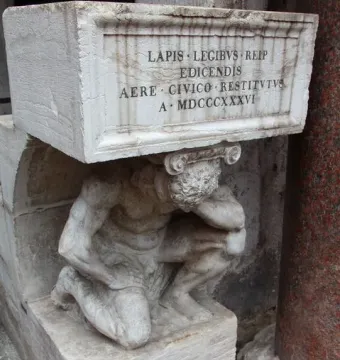
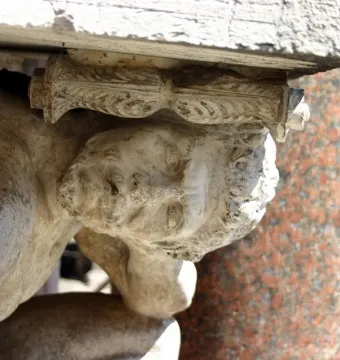
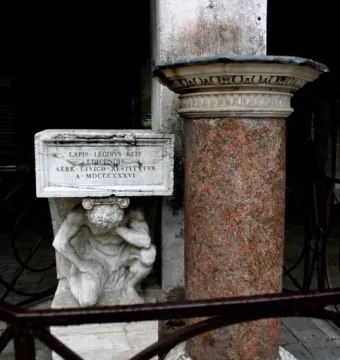
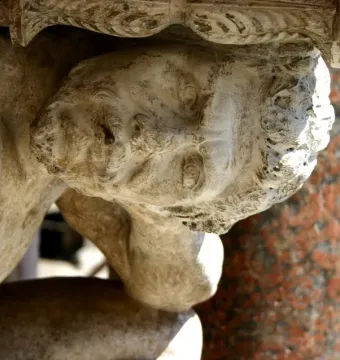
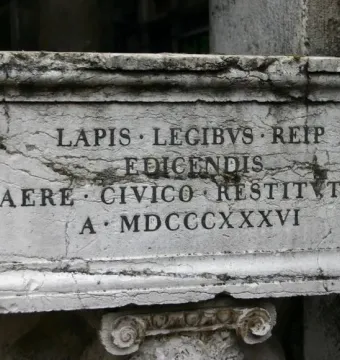
Il Gobbo di Rialto, also known as the Hunchback of Rialto, is a statue of Istrian marble located opposite the church of San Giacomo di Rialto in Venice. Created in the 16th century by Pietro da Salò, it depicts a crouching, naked hunchback supporting a small staircase. According to Stefano Magno, it was inaugurated on 16 November 1541 and used as a platform for official proclamations. It also served in the punishment of minor offenders. In 1836, the municipality restored the statue and added a Latin inscription on the platform; an iron grille was installed for protection. The sculpture was also linked in tradition to the speaking statue Pasquino in Rome and may have inspired characters in Shakespeare’s The Merchant of Venice.
August 2014 © Jean-Pol GRANDMONT · CC BY 4.0
© G.dallorto · Attribution
© G.dallorto · Attribution
© G.dallorto · Attribution
© G.dallorto · Attribution
Identification | |
| Title | Il Gobbo di Rialto |
| Type | Marble statue |
| Alternative name | Gobbo di Rialto; Hunchback of the Rialto |
Historical context | |
| Date created | 16th century; unveiled on 16 November 1541 according to Stefano Magno |
Creator | |
| Artist | Pietro da Salò |
Physical characteristics | |
| Subject | A crouching, naked hunchback holding up a small staircase |
Materials | |
| Material | Istrian marble |
Location and ownership | |
| Location | Opposite the Church of San Giacomo di Rialto, near the Rialto market, Venice, Italy |
| Associated structure | Colonna del Bando, a red granite column nearby, originally from Acre as war booty |
| Associated official | The Comandador |
History and restoration | |
| Change in punishment ritual | In 1545 the kissing point was moved about ten meters to the side, and the Croce dei frustài was placed on the adjacent pillar as the new object to kiss |
| Protection added | An iron grille and an octagonal metal balustrade were installed |
| Restoration | Restored in 1836 with funds provided by the city/civic authorities; a Latin inscription with the restoration date was added above the hunchback's head |
| Additional punishment use | Also used as the endpoint for flogging punishments |
| Punishment ritual | The condemned were stripped naked and made to walk or run from Piazza San Marco to Rialto, sometimes through citizens’ gloves laid along the route, and could end the humiliation by kissing the statue |
| Wear and conservation issue | The statue was worn down by repeated kisses from condemned people |
| Punitive use | Used as the endpoint of punishments for minor offenders and thieves |
| Proclamations | Officials read the Republic of Venice’s laws or the names of offenders from the platform; proclamations were also made from the Pietra del Bando near Piazza San Marco |
| Function | Podium for official proclamations |
Iconography and meaning | |
| Form | A crouching figure supporting a small flight of steps |
| Name origin | Called a gobbo because of its hunched posture |
| Traditional role | A traditional symbol of the Rialto |
Significance | |
| Relation to Pasquino | Said to communicate with Pasquino, one of the talking statues of Rome |
| Pasquino's role | From the early 16th century, Pasquino was used for anonymous satirical criticism of the pope and authorities |
| 17th-century correspondence | In the 17th century Pasquino allegedly exchanged correspondence with the Gobbo about the Republic of Venice, Pope Paul V, and the writings of Cardinals Baronius and Bellarmine |
| Literary inspiration | Some scholars suggest that Launcelot Gobbo and Old Gobbo in Shakespeare’s The Merchant of Venice were inspired by this figure |