
Huangze Monastery Rock Sculptures
The Huangze Monastery rock sculptures are located in Guangyuan, Sichuan, China, on the west bank of the Jialing River at the foot of Wulongshan Mountain. The monastery was originally built during the Tang dynasty under Empress Wu Zetian and also in the Northern and Southern Dynasties period. Its former names were Wunu Monastery and Chuanzhu Temple, while the present monastery buildings date from the Qing dynasty. Behind the monastery, several dozen grottoes in the cliff contain artistically valuable sculptures from the Northern Zhou, Sui, and Song dynasties. Since 1961, the site has been listed as a cultural relic of the People’s Republic of China in Sichuan.
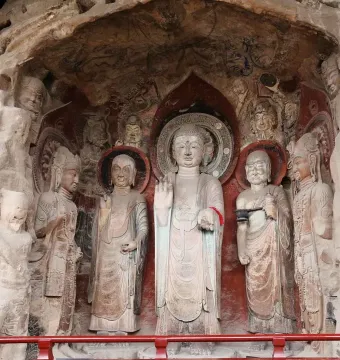
February 2015 © Nekitarc · CC BY-SA 4.0
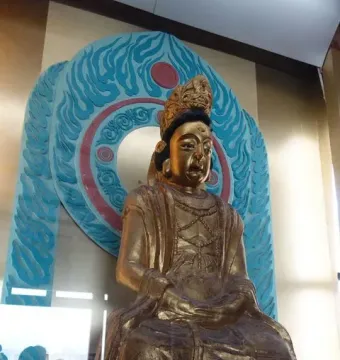
© wanghongliu · CC BY-SA 3.0
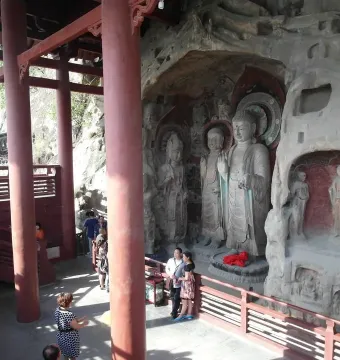
June 2010 © 申威隆 · CC BY-SA 3.0
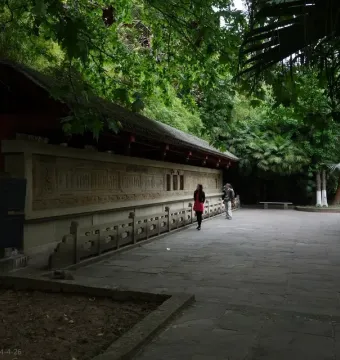
© wanghongliu · CC BY-SA 3.0
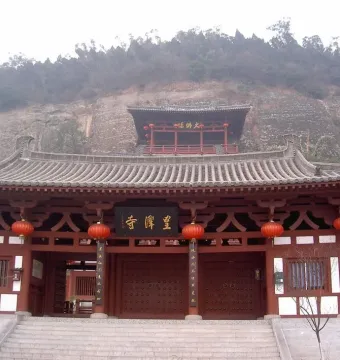
© C.M. Osman · CC BY-SA 3.0
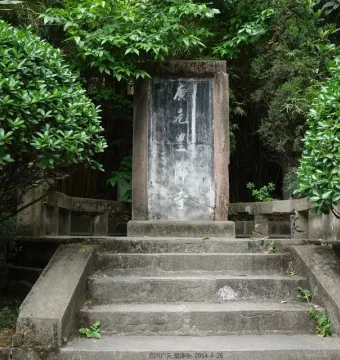
© wanghongliu · CC BY-SA 3.0
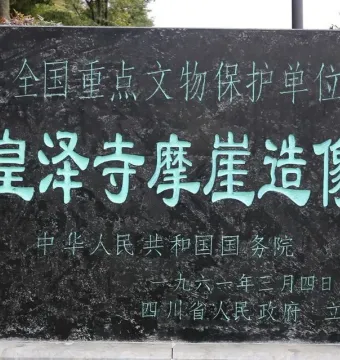
February 2015 © Nekitarc · CC BY-SA 4.0
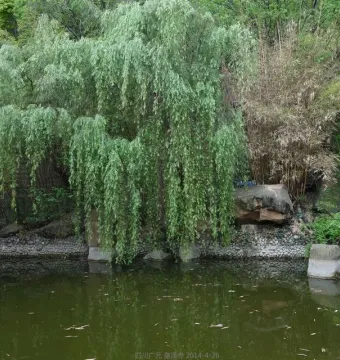
© wanghongliu · CC BY-SA 3.0
Identification | |
| Name | Huangze Temple |
| Original Chinese name | 皇泽寺 |
| Pinyin | Huangzesi |
| Alternative names | Huangze Monastery; Thousand-Buddha cliff statues of Guangyuan |
| Former and historical names | Wunu Monastery (Wunu si, 乌奴寺); Chuanzhu Temple (Chuanzhu miao, 川主庙); Wunusi (乌奴寺); Chuanzhu miao (川主庙) |
| Type | Buddhist temple; Buddhist temple with carved stone Buddhist sculptures; cliff sculptures / grotto sculptures |
Location | |
| Location | Guangyuan, Sichuan Province, China; west of Guangyuan, along the banks of the Jialing River, at the foot of Wulong Mountain |
| Specific setting | On the west bank of the Jialing River at the foot of Wulongshan Mountain; on the west bank of the Jialing River, at the foot of Wulongshan |
| Part of | Huangze Monastery |
| Nearby site | Close to the Thousand-Buddha Cliff |
Discovery and provenance | |
| Protection site names | Huangze si moya zaoxiang; Guangyuan Qianfoya moya zaoxiang |
Historical context | |
| Founding period | Founded during the time of Empress Wu Zetian (624–705); built during the reign of Empress Wu Zetian in the Tang dynasty; during the Northern and Southern Dynasties |
| Associated dynasties / periods | Northern Zhou dynasty; Sui dynasty; Song dynasty; Northern Wei period; Ming period; Qing period |
| Creation period | from the Northern Wei period to the Ming and Qing periods |
| Dating of the cave sculptures | Northern Zhou dynasty (557–581); Sui dynasty (581–618); Song dynasty (960–1279) |
| Monastery construction periods | Built during the reign of Empress Wu Zetian in the Tang dynasty and during the Northern and Southern Dynasties |
Creator | |
| Dedicated to | Wu Zetian |
| Founding association | Wu Zetian was originally from this province |
Physical characteristics | |
| Number of grottoes | Several dozen |
| Number of caves | Several dozen caves |
| Cliff carvings | 6 caves, 41 niches, and 1,203 sculptures on a cliff |
| Notable sculptural features | Many carved Buddhas in the stone mountain behind the cloister |
Materials | |
| Material | Stone |
Appearance | |
| Description | Carved Buddhas; carved stone Buddhist sculptures |
Iconography and meaning | |
| Uniqueness | the only temple dedicated to Wu Zetian |
Significance | |
| Artistic value | The sculptures are described as artistically valuable |
| Heritage status | Listed as a historic monument (1-43) since 1961 |
| Designation | Major National Historical and Cultural Site |
| Designation date | 1961 |
| Tourist status | AAAA-level tourist attraction |
History and restoration | |
| Current buildings date from | Qing dynasty (1644–1912) |
| Protection status | Since 1961, listed among the cultural relics of Sichuan Province of the People's Republic of China |
| Protection list numbers | 1-43 and 1-44 |