
The Shade
The Shade is a sculpture by the French artist Auguste Rodin, conceived around 1880. It was used in triple form as part of Rodin’s large-scale work The Gates of Hell. Over time, it evolved into both the life-size sculpture known as The Three Shadows and a separate single-figure sculpture, The Shade. The original individual figure did not have a right hand; in 1904, Rodin asked Josef Maratka to add one for both the single figure and The Three Shadows.
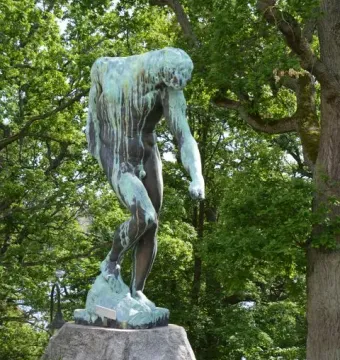
July 2015 © Bengt Oberger · CC BY-SA 4.0
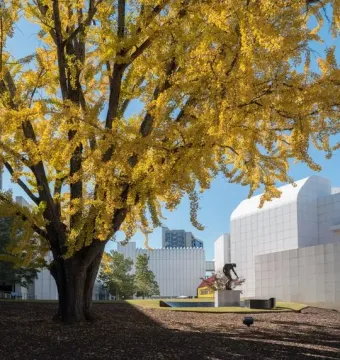
November 2017 © Marc Merlin · CC BY-SA 4.0
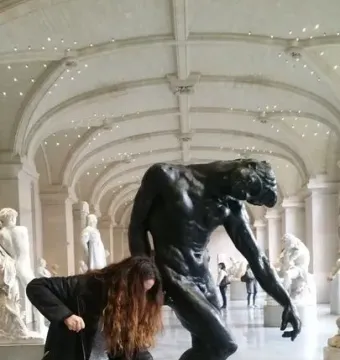
January 2017 © Marine4559 · CC BY-SA 4.0
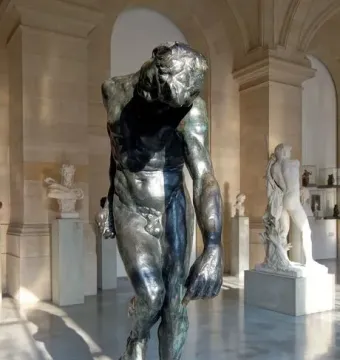
© Auguste Rodin · CC BY-SA 4.0
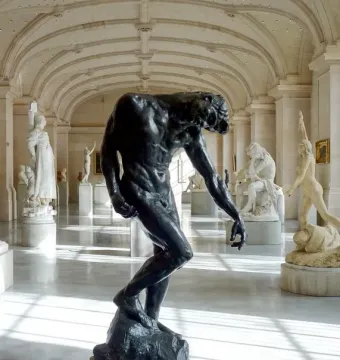
April 2015 © Auguste Rodin · CC BY-SA 4.0
Identification | |
| Title | The Shade |
| Alternative names | The Slave; The Titan; A Sombra; O Escravo; O Titã |
| Type | Sculpture |
| Original titles | L'Ombre; L'ombra; La sombra |
Historical context | |
| Date conceived | c. 1880 |
Creator | |
| Artist | Auguste Rodin |
| Artist nationality | French |
Discovery and provenance | |
| Use in The Gates of Hell | Used in triplicate as part of The Gates of Hell, in the upper section |
| Related works | Evolved into The Three Shadows and a separate single-figure sculpture, The Shade |
| Version count | Various versions exist; Rodin repeated the sculpture three times |
| Collection | Museo Soumaya / Soumaya Museum |
| Location | Mexico City, Mexico |
| Cast version in collection | A version cast in 1967 is in the Soumaya Museum collection |
Materials | |
| Date cast | 1967 |
| Material | Bronze |
| Foundry | Casa Georges Rudier / Georges Rudier |
| Patina | Black and green patina |
Physical characteristics | |
| Depicted figure | Naked man |
| Pose | Head lowered, left arm extended |
| Musculature | Exaggerated |
| Original hand detail | The original figure lacked a right hand |
Appearance | |
| Expressive effect | Greater dramatic intensity |
Iconography and meaning | |
| Subject | A defeated man |
| Interpretation | Judith Cladel said the work derives from Rodin's first study for Adam |
History and restoration | |
| Right hand addition | A right hand was added in 1904 by Josef Maratka at Rodin's request |
| Figures the hand was added to | The individual figure and The Three Shadows |
Other | |
| Arrangement | In The Three Shadows, the figures have different profiles and their arms meet at the center to emphasize a central axis |