
Jean de Fiennes
Jean de Fiennes is a sculpture by Auguste Rodin created in the 1890s as part of The Burghers of Calais. It represents one of the six citizens of Calais, alongside figures such as Pierre de Wissant and Eustache de Saint Pierre. The historical Jean de Fiennes was said to be the captain of Calais and the youngest of the group, though the name was assigned to one of the burghers only long after the events of 1346 that inspired Rodin’s scene. Rodin made several studies for the figure, exploring different arm positions, gestures, and drapery before arriving at the final version. The completed figure is clothed, with its arms extended and hands open.
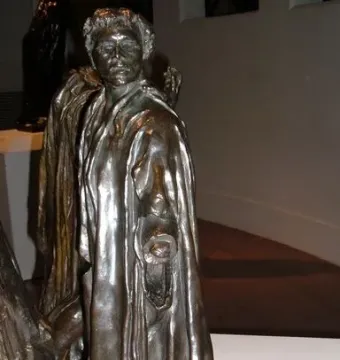
October 2008 © BrokenSphere · CC BY-SA 3.0
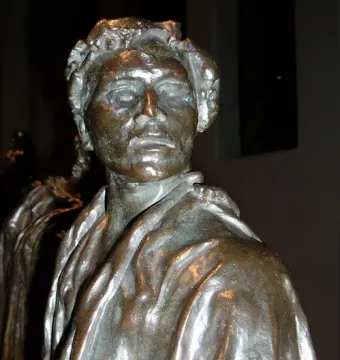
October 2008 © BrokenSphere · CC BY-SA 3.0
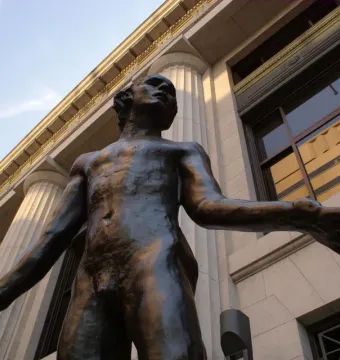
September 2006 © 663highland · CC BY 2.5
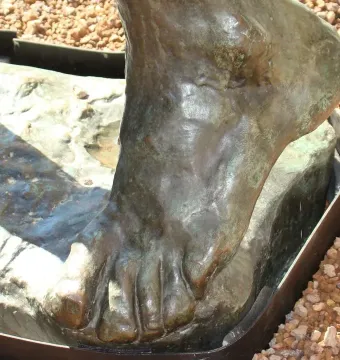
October 2008 © Nicolás Pérez · CC BY-SA 3.0
March 2009 © Nicolás Pérez · CC BY-SA 3.0
Identification | |
| Title | Jean de Fiennes |
| Type | sculpture |
Historical context | |
| Historical event | The Siege of Calais during the Hundred Years' War |
| Historical figure | Jean de Fiennes (attributed later; his name was not recorded in Jean Froissart's chronicles and was assigned to one of the burghers long after the 1346 event) |
| Historical role | Captain of Calais and the youngest of the six burghers |
| Associated group | One of The Burghers of Calais |
| Related figures in the group | Eustache de Saint-Pierre, Pierre de Wiessant, Jacques de Wiessant, Jean d'Aire, Andrieu d'Andres |
Creator | |
| Artist | Auguste Rodin |
| Artist nationality | French |
Discovery and provenance | |
| Surviving versions and locations | Bronze cast at Museo Soumaya, Mexico City; bronze cast at Saint Louis Art Museum; study at Maryhill Museum of Art; armless study at Stanford University |
| Model and study process | Rodin made individual models of the figures to study proportions and emotional expression, then worked each piece individually |
| Alternative name | Jean de Vienne |
| Series or work context | Part of The Burghers of Calais monument |
| Inauguration place | the city of the historical event |
| Inaugurated | 1895 |
| Date of creation | 1885–1886 |
| Conceived | 1885–1886 |
| Commissioned | 1885 |
Physical characteristics | |
| Material | Bronze |
| Type of study | Individual nude modello |
Appearance | |
| First nude study | Figure completely nude to study body proportions; one version has arms tense with clenched fists, another has arms at his sides with open hands |
| Second study | Nude upper body with arms extended and palms upward; a shirt is held by the forearms and covers the lower body and legs; face shown in profile facing left |
| Third study | Figure without arms, covered by a robe from shoulders to feet, with more hair and greater detail in the facial features |
| Final figure | Fully dressed in a long camisole reaching the ankles, with arms extended and open hands; the pose matches the first nude study |
| Separate studies | Rodin also created a separate head and a separate left hand |
Iconography and meaning | |
| Interpretive meaning | The facial expression is meant to convey the emotions the character may have felt upon learning his fate |
Significance | |
| Comparative significance | Jean de Fiennes underwent the greatest number of changes of the monument's figures compared with the preliminary studies |