
Blessed Soul
Blessed Soul is a bust sculpture by the Italian artist Gian Lorenzo Bernini, made around 1619. It was created as a pair with Damned Soul, and both works were commissioned by Cardinal Montoya, for whom Bernini also made a sculptural portrait. The sculpture was originally kept in the sacristy of the Church of Our Lady of the Sacred Heart. In the late 19th century, it was transferred to the Embassy of Spain to the Holy See in Piazza di Spagna.
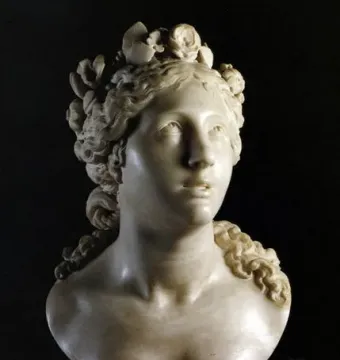
August 2013 · Public domain
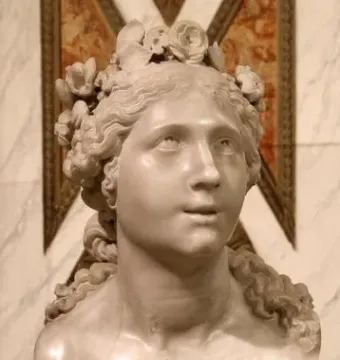
December 2017 © Sailko · CC BY 3.0
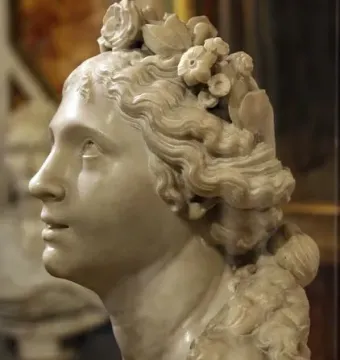
December 2017 © Sailko · CC BY 3.0
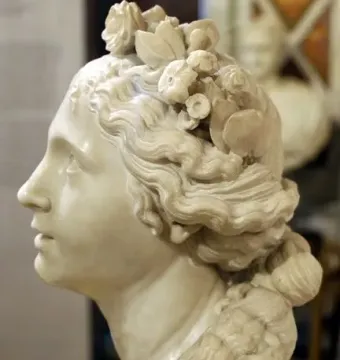
December 2017 © Sailko · CC BY 3.0
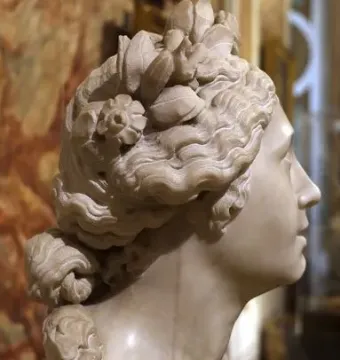
December 2017 © Sailko · CC BY 3.0
Identification | |
| Title | Blessed Soul |
| Alternative title | Alma bendita |
| Type | marble bust |
| Original title | Anima beata |
Historical context | |
| Date created | circa 1619 |
| Related work | Pendant to Damned Soul (Anima dannata / Âme damnée / Alma maldita) |
| Other work for the commissioner | Bernini also made a bust of Cardinal Montoya |
Creator | |
| Artist | Gian Lorenzo Bernini |
| Artist nationality | Italian |
| Commissioned by | Cardinal Montoya, probably |
Discovery and provenance | |
| Identification | Traditionally identified as the personification of Christian blessedness; recent studies question this and suggest it may instead be a nymph |
| Possible inspiration | prints by Karel van Mallery |
| Original location | the sacristy of the Church of San Giacomo degli Spagnuoli (also known as the Church of Our Lady of the Sacred Heart / Nostra Signora del Sacro Cuore) |
| Date of relocation | late 19th century |
| Current location | Spanish Embassy to the Holy See, Piazza di Spagna, in the Palazzo di Spagna |
Appearance | |
| Initial categorization | Initially categorized as a nymph and a satyr |
Significance | |
| Reception | Not particularly well known, but it attracted the attention of some visitors to Rome |
| Joshua Reynolds's assessment | He said it had all the sweetness and perfect happiness imaginable, visible in its expression |
| Rudolf Wittkower's observation | He noted the woman's soft hair |
| Howard Hibbard's assessment | He considered it inferior to the Damned Soul and thought virtuous appearances do not translate well into sculpture |
| Later critical reception | Not considered one of Bernini's finest works in more recent times |