
The Rape of Proserpina
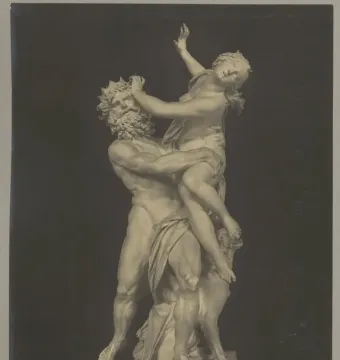
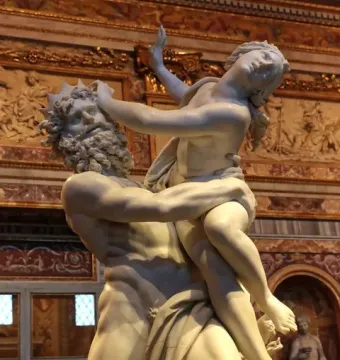
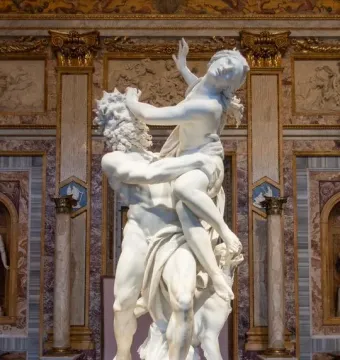
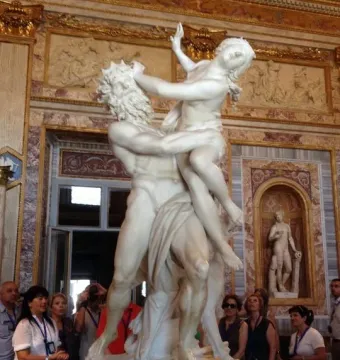
The Rape of Proserpina is a large marble sculpture by Gian Lorenzo Bernini, made between 1621 and 1622 in the Baroque style. It was commissioned by Scipione Borghese and later given to Cardinal Ludovico Ludovisi in 1622, who took it to his villa. The work remained there until 1908, when the Italian state acquired it and returned it to the Galleria Borghese. The sculpture depicts a moment from the myth of Pluto and Proserpina, showing the abduction of Proserpina and the struggle between the two figures. Its twisted contraposto and serpentinata composition allow the scene to be viewed in different ways from different angles, and it is especially noted for its detailed rendering of flesh and forceful movement.
© Rijksmuseum · CC0
October 2017 © Burkhard Mücke · CC BY-SA 4.0
March 2023 © Kent Wang · CC BY-SA 2.0
June 2014 © daryl_mitchell · CC BY-SA 2.0
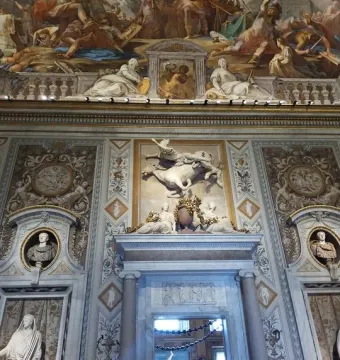
August 2025 © Luistxo · CC BY-SA 4.0
Identification | |
| Title | The Rape of Proserpina |
| Alternative titles | Pluto and Proserpina; The Abduction of Proserpina; Il Ratto di Proserpina; El rapto de Proserpina; O Rapto de Proserpina; L'Enlèvement de Proserpine; Le Rapt de Proserpine |
Creator | |
| Artist | Gian Lorenzo Bernini |
| Artist nationality | Italian |
| Artist description | Considered one of the greatest artists of the 17th century |
| Artist working center | Rome |
| Artist age at completion | 23 years old |
| Career stage | Early stage of Bernini's career |
| Artist lifespan | 1598–1680 |
Historical context | |
| Subject matter | A clearly pagan theme |
| Seasonal arrangement | Proserpina spends part of the year with her husband in the underworld and part with her mother; one version says half the year, another says four months with her husband |
| Mythic taboo | She could not eat anything offered to her in the underworld or she would never return home |
| Pomegranate seeds motif | While Zeus tried to persuade Hades to release her, Proserpina ate pomegranate seeds, sealing her fate |
| Marriage in the myth | She was forced to marry Hades/Pluto |
| Mythological equivalents | In Greek mythology, Pluto is Hades and Proserpina is Persephone; Ceres is Demeter |
| Maffeo Barberini's response | He was impressed by the quality of the sculpture |
| Explanation for pagan subject in a cardinal's house | A moralizing Latin couplet by Maffeo Barberini, later Pope Urban VIII, was used to justify it |
| Latin couplet | "Quisquis humi pronus flores legis, inspice saevi me Ditis ad domum rapi" |
| Translation of couplet | "O you who, bent to the ground, gather flowers, see how I am being snatched away to the house of the cruel ruler" |
| Consequences of the abduction | Demeter/Ceres punished the world by destroying crops, bringing chaos and famine |
| Influences | Giambologna and Annibale Carracci |
| Art-historical reference | The pose is a reminiscence of Mannerism |
| Historical context | Many sculptures of the period lacked a single central perspective and required viewing from multiple sides before being understood in full |
| Possible reason for subject choice | Possibly linked to the recent death of Pope Paul V or to Ludovico Ludovisi's recent rise to power |
| Mythological narrative | Pluto abducts Proserpina while she is gathering flowers; Ceres searches for her daughter and causes the earth to become barren; Zeus/Jupiter intervenes; Proserpina eats pomegranate seeds in the underworld; she is forced to divide the year between her husband and mother |
| Mythological background | Proserpina/Persephone enchanted the dark god with her beauty and was taken to the depths of the Earth, causing her mother’s anger |
| Commissioned by | Cardinal Scipione Borghese |
| Art period | Baroque |
| Date made | 1621–1622 |
| Date started | June 1621 |
| Date completed | 1622 |
| Mythological seasonal meaning | When Proserpina is with Pluto, nature dies and winter begins; when she lives with Ceres, spring returns |
| Payments received | At least three payments totaling no less than 450 Roman scudi |
| Associated work | Portrait bust of Pope Paul V (1621) |
| Made for | Cardinal Scipione Borghese; executed together with the portrait bust of Pope Paul V |
| Subject | The Roman myth of the abduction of Proserpina by Pluto |
| Literary sources | Ovid's Metamorphoses and Claudian's De Raptu Proserpinae |
| Mythological figures | Pluto, Proserpina, Ceres, Jupiter, Cerberus |
| Mythological parentage | Proserpina is the daughter of Jupiter and Ceres |
| Mythological interpretation | The story symbolizes the changing of the seasons |
Discovery and provenance | |
| Current pedestal | Pedestal designed by Pietro Fortunati |
| Returned location | Galleria Borghese, Rome |
| Acquisition date | 1908 |
| Acquired by | The Italian State |
| Inventory description | A marble Proserpina carried off by Pluto, about 12 palms high, with a three-faced dog, a marble pedestal, and verses on the front |
| Reason for transfer | Unknown; suggested possibilities include political expediency or a gesture of good will by Borghese |
| Ludovisi display location | His villa |
| Later owner | Cardinal Ludovico Ludovisi |
| Transfer date | 1623 |
| Pedestal inscription | A poem by Maffeo Barberini |
| Original installation | Placed on a pedestal, now destroyed |
| Planned installation date | 23 September 1622 |
| Initial location | Villa Borghese near Porta Pinciana |
| Commission payment start | June 1621 |
| Transferred to | Cardinal Ludovico Ludovisi |
Physical characteristics | |
| Viewing perspective | Designed to be fully seen from a single frontal viewpoint in front of the base; other viewpoints are secondary |
| Contrast in figures | A young, beautiful girl is contrasted with a tall, muscular, bearded Pluto |
| Movement and dynamism | The group conveys dynamism through Proserpina pulling away from Pluto |
| Composition | Pluto lifts and carries Proserpina away as she struggles to break free |
| Drapery detail | A piece of fabric covers Pluto's thigh and Proserpina's shoulder |
| Figure treatment | The figures are almost completely nude |
| Figures depicted | Pluto, Proserpina, and Cerberus |
| Height | 2.55 m |
| Type | Large Baroque marble group sculpture |
Appearance | |
| Expression of Proserpina | Her face shows fear and protest; she weeps and prays to heaven |
| Hair depiction | Her hair is blown by the wind |
| Flesh rendering | The marble closely renders the softness of flesh |
| Realist effect | The marble imitates other materials, such as flesh |
| Detail of flesh rendering | Proserpina pushes against Pluto's head, stretching his skin; Pluto's fingers press into Proserpina's flesh |
| Notable detail | A stream of tears contributes to the expressiveness of Proserpina's face |
| Pluto depiction | Pluto is shown moving quickly and seizing Proserpina strongly |
| Material treatment | Pluto is deliberately made from darker marble |
Technique | |
| Stylistic feature | Twisted contrapposto using the linea serpentinata |
| Notable sculptural effect | Detailed representation of the softness of flesh |
| Material | Marble |
| Material treatment | Pluto is deliberately made from darker marble |
| Specific marble | Carrara marble |
| Material detail | White Carrara marble |
Iconography and meaning | |
| Border symbol | Cerberus symbolizes the boundary to the underworld |
| Clothing relation | Cerberus is connected to Pluto by the drapery |
| Pluto's vehicle | A chariot pulled by four black horses |
| Figures in inventory | A three-faced dog with a marble pedestal and verses on the front |
| Underworld symbol | Cerberus, the three-headed dog and guardian of Hades |
| Viewpoint interpretation | From the left: the abduction; from the front: arrival at Hades; from the right: Proserpina pleading to return to Earth for six months |
| Story setting | Proserpina is gathering flowers in a meadow with her companions when she is abducted |
| Depicted action | Pluto seizes Proserpina while she is picking flowers and carries her down to the Underworld |
| Scene depicted | The climactic moment when Pluto seizes Proserpina as he carries her across the boundary of the underworld |
Location and ownership | |
| Current location | Galleria Borghese, Rome |
| Current placement | Reinstalled in the Borghese Gallery in 1908 |
| Former location | His villa |
| Current ownership | The Italian State |
| Earlier ownership | Cardinal Ludovico Ludovisi |
History and restoration | |
| Later history | In 1908 the sculpture was acquired by the Italian state and returned to the Villa Borghese |
| Prepared material | Preparatory elements survive; this is the only work for which preparatory material survives |
| Current installation | On a pedestal designed by Pietro Fortunati |
Significance | |
| Critical reception | Praised for its realism |
| Classification | Masterpiece of Bernini |