
Situla of the Pania
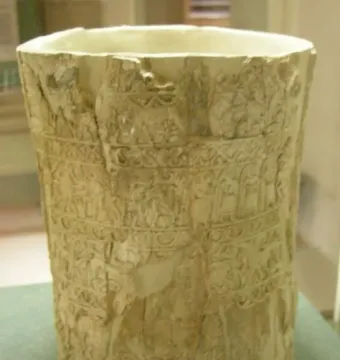
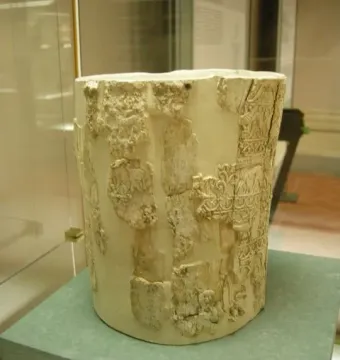
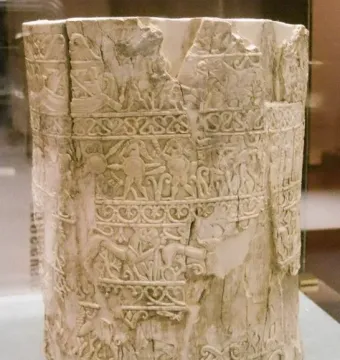
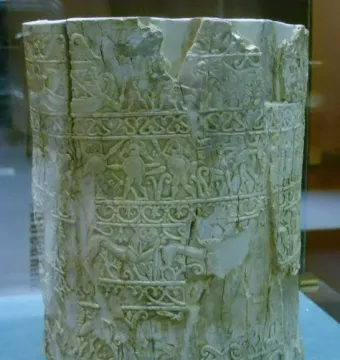
The Situla of the Pania is an ivory situla or pyxis from the end of the seventh century BC, found in the Tomb of the Pania in Chiusi and now conserved in the Museo archeologico nazionale di Firenze. It is one of the most important examples of Etruscan ivory work, with only two other known examples, one from Chiusi and one from Cerveteri. The vessel is a hollow cylinder 22 cm high, decorated with horizontal friezes separated by bands of carved plant motifs, including interweaved palmettes and lotus flowers. Its upper friezes show scenes from the Odyssey, warriors, mourning women, a funerary dance, and horsemen, while later bands feature beasts, monsters, and imaginary animals.
December 2008 © sailko · CC BY 2.5
December 2008 © sailko · CC BY 2.5
February 2022 © Ismoon · CC BY-SA 4.0
© Sailko · CC BY 2.5
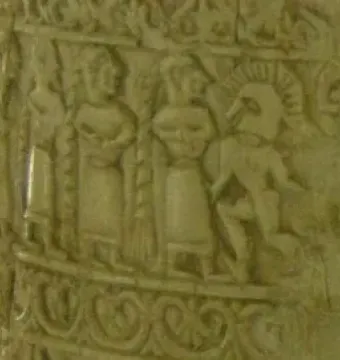
December 2008 © sailko · CC BY 2.5
Identification | |
| Title | Situla of the Pania |
| Type | Ivory situla or pyxis |
Historical context | |
| Date | Late 7th century BC |
| Culture | Etruscan |
Discovery and provenance | |
| Discovery place | Tomb of the Pania, Chiusi |
Location and ownership | |
| Current location | Museo archeologico nazionale di Firenze |
Physical characteristics | |
| Form | Hollow cylinder |
| Height | 22 cm |
Materials | |
| Material | Ivory |
| Construction | Made from a section of an elephant tusk |
Technique | |
| Display status | Exhibited in reconstructed form |
Appearance | |
| Upper and lower bands | Lotus flowers |
| Decoration | Horizontal friezes separated by narrow carved bands with vegetal motifs; two wider bands at the top and bottom |
| Vegetal motifs | Interlaced palmettes and lotus flowers |
Iconography and meaning | |
| Upper frieze imagery | Two myths from the Odyssey, separated by a sphinx: the encounter with Scylla and the escape from Polyphemus |
| Scylla depiction | Scylla resembles a hydra; described as a fish-like monster with three long necks with dog heads |
| Second frieze imagery | Warrior’s departure for war, hoplites greeting, mourning women, a warrior performing a funerary dance, and a horseman |
| Mourning women | Women with long braids and arms crossed over their chests |
| Third band imagery | Beasts and monsters in orientalizing style, including a centaur |
| Last band imagery | Other imaginary animals |
Style | |
| Style | Less monumental than earlier ivories, but more vividly narrative |
Significance | |
| Art historical significance | One of the most important examples of Etruscan ivory workmanship; only two other examples are known, one from Chiusi and one from Cerveteri |