
Kanaris at Chios
Kanaris at Chios, also known as The Kanaris Brothers or The Sailors of the English Garden, is a marble sculpture by Benedetto Civiletti, made in Palermo in 1878. It depicts Konstantínos Kanáris in the foreground and Andréas Pipínos at Chios as they sailed in a fireship toward the Ottoman admiral Nasuhzade Ali Pacha’s vessel. The work refers to the burning of the Ottoman flagship off Chios during the Greek War of Independence, carried out in retaliation for the Chios massacre two months earlier. Bought by Prince Humbert of Savoy after its exhibition in Palermo, it was later shown in Paris, where it won a gold medal at the 1878 Exposition Universelle. It is now displayed in a small neo-Moorish pavilion in the English Garden, now called Piersanti Mattarella Garden, in Palermo.
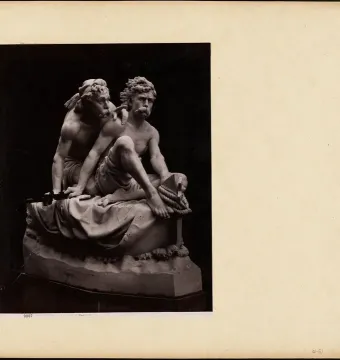
© Tupper, William Vaughn, 1835-1898 · Public domain
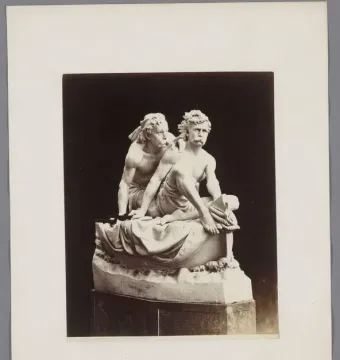
© Rijksmuseum · CC0
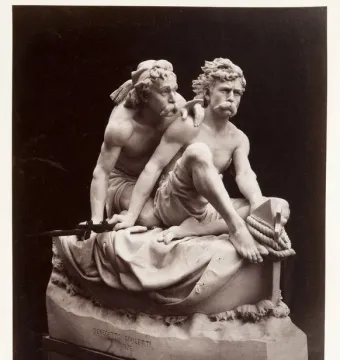
© Benedetto Civiletti · Public domain
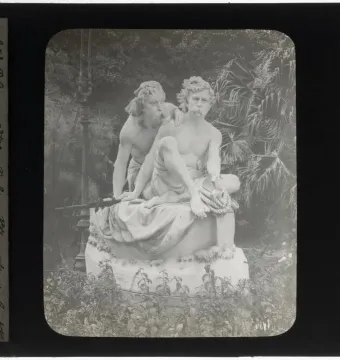
© Civiletti, Benedetto (Italian sculptor, 1845-1899) (artist) · Public domain
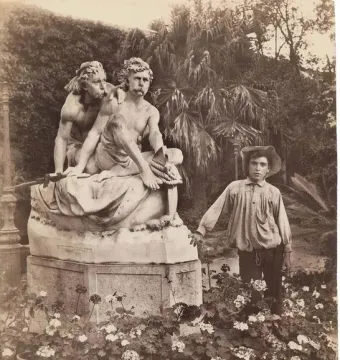
© Wilhelm von Gloeden · Public domain
Identification | |
| Title | Kanaris at Chios |
| Alternative names | The Kanaris brothers; The sailors of the English Garden; Les frères Kanaris; Les marins du Jardin anglais; I fratelli Kanaris; I marinai del Giardino Inglese |
| Original-language title | Kanaris a Scio |
| Type | Marble sculpture |
Creator | |
| Artist | Benedetto Civiletti |
Historical context | |
| Date of creation | 1878 |
| Place of creation | Palermo, Sicily, Italy |
Materials | |
| Material | Marble |
| Original material | Stucco |
| Later material | Marble copy |
Iconography and meaning | |
| Political interpretation | May have resonated with Italian nationalist feeling after unification; later also read as reflecting anarchist patriotism |
| Related artistic context | Connected with Romantic responses to the Greek War of Independence, including works by Eugène Delacroix, Gioachino Rossini, Victor Hugo, Percy Bysshe Shelley, and Lord Byron |
| Inspiration | Apparently inspired by Angelo Brofferio's recently published Scene Elleniche antica e nuova Grecia |
| Outcome of depicted event | About 2,000 Ottoman sailors were killed, including Nasuhzade Ali Pasha |
| Ottoman admiral | Nasuhzade Ali Pasha |
| Historical context | A reprisal for the Chios massacre two months earlier |
| Depicted event date | Night of 6–7 June 1822 |
| Depicted subject | The burning of the Ottoman flagship off Chios during the Greek War of Independence |
| Depicted figures | Konstantinos Kanaris in the foreground; Andreas Pipinos |
Discovery and provenance | |
| First exhibition | Palermo, 1875 |
| First purchaser | Prince Umberto di Savoia |
| Acquisition | Bought by Prince Umberto di Savoia during its exhibition in Palermo |
| Later exhibition | Paris, 1878 |
| Award | Gold medal at the 1878 Exposition Universelle in Paris |
| Donation | Prince Umberto di Savoia donated the marble copy to the Comune of Palermo |
Location and ownership | |
| Original display location | Gardens of Villa Giulia, Palermo |
| Current location | A small Neo-Moorish pavilion in the Giardino Inglese, now renamed Piersanti Mattarella Park |
| Placement | Installed in a pavilion |
| Pavilion style | Neo-Moorish |
History and restoration | |
| Current condition | Displayed in a vandalized state |