
Black Obelisk of Shalmaneser III
The Black Obelisk of Shalmaneser III is a Neo-Assyrian black limestone monument from Nimrud (Kalhu) in northern Iraq. It measures 197.85 cm high and 45.08 cm wide and is now displayed in the British Museum. Dating to 825 BCE, it was set up as a public monument during a period of civil war. The obelisk is the best-preserved of the known Assyrian obelisks and is historically important for preserving the earliest depiction of an Israelite. Its 20 relief scenes show five subjugated kings bringing tribute and bowing before the Assyrian king, with cuneiform inscriptions above each scene and longer inscriptions at the top and bottom recording Shalmaneser III’s annals.
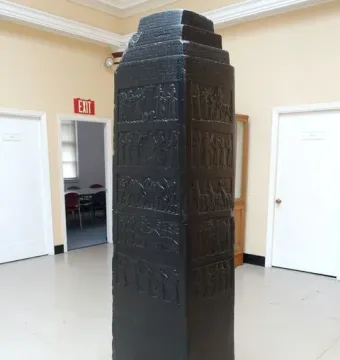
April 2016 © Daderot · Public domain
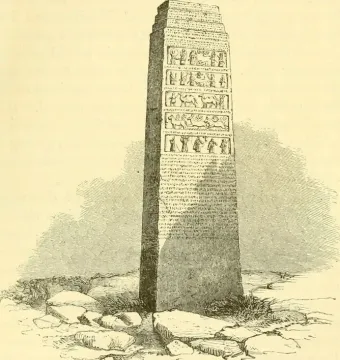
1862 © Internet Archive Book Images · No restrictions
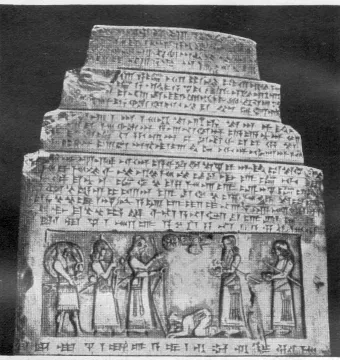
1925 © Albert Schramm · Public domain
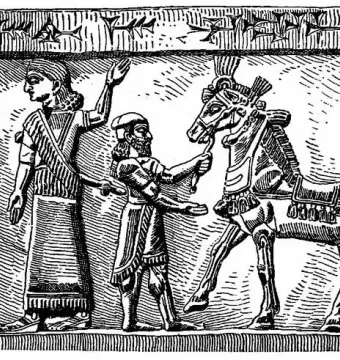
June 1912 © Fulcran Vigouroux · Public domain
© Unknown authorUnknown author · Public domain
Identification | |
| Title | Black Obelisk of Shalmaneser III |
| Original-language name | Der Schwarze Obelisk von Salmanassar III.; Czarny obelisk Salmanasara III |
| Type | Obelisk |
Historical context | |
| Date of creation / erection | c. 825 BC |
| Context of erection | Set up as a public monument during a civil war in Assyria |
| Historical significance | One of two complete Neo-Assyrian obelisks known; important source for the history of Shalmaneser III, the earliest known reference to the Persians (Parsua), and the oldest surviving depiction of an Israelite |
Creator | |
| Commissioned by | Shalmaneser III, possibly by the commander-in-chief Dayyan-Assur |
| Associated ruler | Shalmaneser III |
| Reign of associated ruler | 858–824 BC |
Discovery and provenance | |
| Origin / discovery site | Kalhu (Nimrud), ancient Assyrian capital, northern Iraq, near the Tigris River, about 30 km southeast of Mosul |
| Discovery date | 1846 |
| Discoverer | Sir Austen Henry Layard |
Location and ownership | |
| Current location | British Museum, London |
| Display status | Currently exhibited in the British Museum |
| Original placement | Probably the central square of Nimrud; possibly the palace audience hall at Kalhu |
Physical characteristics | |
| Preservation status | Best-preserved complete Assyrian obelisk discovered so far |
| Color | Black |
| Form | Four-sided monolithic obelisk |
| Height | About 198 cm |
| Width | About 45 cm |
Materials | |
| Material | Black limestone |
Technique | |
| Decoration technique | Bas-relief scenes and cuneiform inscriptions |
Appearance | |
| Relief arrangement | Twenty relief scenes arranged as five scenes on each of the four sides, with each scene occupying four panels |
Iconography and meaning | |
| Inscription content | The top and bottom inscriptions record the annals of Shalmaneser III, listing annual military campaigns up to the 31st regnal year, including campaigns led by his commander-in-chief Dayyan-Assur |
| Political meaning | A public monument and piece of Assyrian propaganda commemorating Shalmaneser III's military achievements and subjugated rulers |
| Depicted figures | Shalmaneser III shown in majesty receiving tribute, accompanied by attendants and bodyguards |
| Jehu scene date | About 841 BC |
| Inscriptions | Cuneiform captions above each scene, plus long inscriptions at the top and bottom of the obelisk |
| Jehu scene inscription | Identifies the figure as 'Jehu, son of Omri' and records his tribute |
| Jehu identification | Traditionally identified as Jehu, king of Israel, but this identification has been questioned; some scholars propose Jehoram of Israel instead |
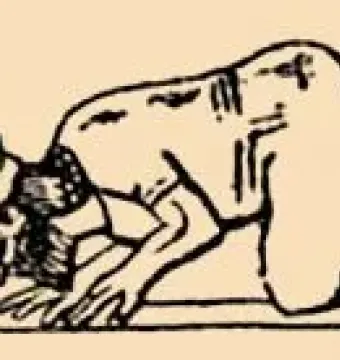
| Notable depictions | Jehu of Israel kneeling before Shalmaneser III; the oldest surviving depiction of an Israelite and, according to some interpretations, of a biblical figure |
| Depicted tribute | Silver, gold, gold vessels, tin, bronze objects, ivory, ebony, lead, spears, sea silk, multicoloured garments, linen cloth, animals, and other gifts |
| Subject | Tribute scenes showing subdued kings and peoples bringing offerings before Shalmaneser III |
Other | |
| Replicas | Several museum cast replicas exist |
| Comparison | Other complete Neo-Assyrian obelisk: White Obelisk of Ashurnasirpal I |