
Gradiva
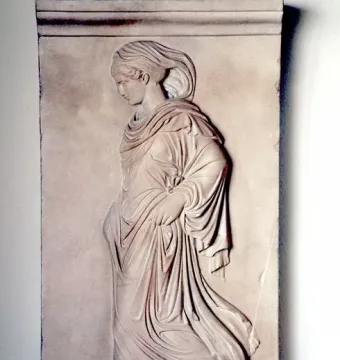
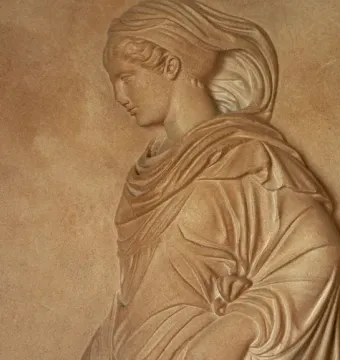
Gradiva is a modern mythical figure that originated in Wilhelm Jensen’s novella Gradiva: Ein pompejanisches Phantasiestück (1903). The name was given by a young archaeologist to a striking walking female figure on an ancient relief, inspired by the epithet of Mars Gradivus. In the story, he later believes he encounters Gradiva alive in the ruins of Pompeii, but the woman is actually his childhood friend Zoë Bertgang. Sigmund Freud’s 1907 study The Delusion and Dreams in W. Jensen’s Gradiva brought the novella renewed attention and helped make Gradiva a modern mythic figure. The relief itself is real and was described by Friedrich Hauser in 1903 as a neo-Attic Roman bas-relief, probably after a 4th-century BC Greek original. It represents the Agraulides and includes a fragment in the Vatican Chiaramonti Museum in Rome.
© Rama · CC BY-SA 2.0 fr
© Rama · CC BY-SA 2.0 fr
© Rama · CC BY-SA 2.0 fr
© Rama · CC BY-SA 2.0 fr
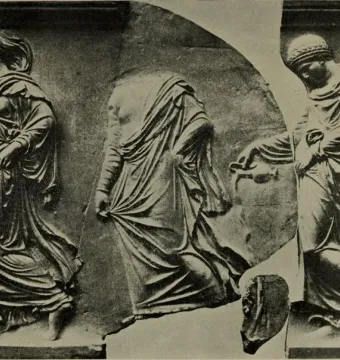
1906 © Powell, Benjamin · No restrictions
Identification | |
| Title | Gradiva |
| Alternative name | the one who walks; she who steps along |
| Type | mythical figure / literary character |
Historical context | |
| Origin | Wilhelm Jensen's novella Gradiva |
| Date | 1902 |
| Description | A modern mythical figure based on an ancient female relief figure; the name was later transferred from the literary character to the relief and its image |
| Origin of the name | From the epithet Gradivus of Mars, the Roman god of war who goes out to battle |
| Literary role | In Jensen's novella, the young archaeologist Norbert Hanold names an attractive striding female figure on an ancient relief Gradiva |
| Freud's interpretation | Sigmund Freud analyzed the novella and Hanold's dreams in Der Wahn und die Träume in W. Jensens Gradiva (1907), helping turn Gradiva into a modern mythical figure |
| Later reception | Became a prominent subject in Surrealist art and literature |
| Related award | The NAAP Gradiva Award has been awarded since 1994 for literary and artistic achievements portraying psychoanalysis and psychotherapy |
Creator | |
| Freud correspondence | Freud exchanged letters with Wilhelm Jensen; Jensen said he had not known Freud's The Interpretation of Dreams (1900) |
| Author of literary character | Wilhelm Jensen |
| Freud essay date | 1907 |
| Freud essay | Der Wahn und die Träume in W. Jensens Gradiva |
Discovery and provenance | |
| Publication of description | Described by Friedrich Hauser in 1903 |
| Reconstruction | Archaeologist Friedrich Hauser reconstructed the relief from fragments dispersed across several museums |
| Fragment locations | Vatican Chiaramonti Museum, Rome; Uffizi Museum, Florence |
Physical characteristics | |
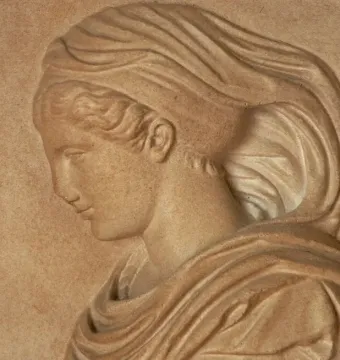
| Face | Rather narrow face; not strikingly beautiful in a sculptural sense |
| Hair | Lightly wavy hair, almost entirely wrapped in a wrinkled headscarf |
| Head position | Head slightly bent forward |
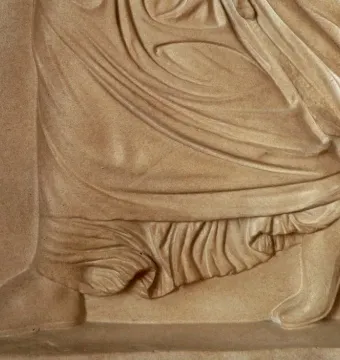
| Footwear | Sandals visible |
| Gesture | Holding up her richly pleated garment from the neck down to the ankles |
| Depicted figures | The three Agraulides: Herse, Pandrosos, and Agraulos; also identified as the Horae and Agraulids in some descriptions |
| Pose | Shown walking with the left foot advanced and the right foot about to follow |
| Size | About one-third life size |
| Relationship to original | Probably a copy of a Greek original from the 4th century BCE |
| Type | Neo-Attic Roman bas-relief |
Iconography and meaning | |
| Subject meaning | Goddesses of the nourishing dew |
Appearance | |
| Stylistic impression | Natural, simple, girlish grace rather than formal plastic beauty |
| Movement effect | Creates an impression of extreme lightness combined with secure repose |
| Life-like quality | Described as giving the impression of being infused with life |
Location and ownership | |
| Freud's copy | A copy was bought by Sigmund Freud in 1907 at the Vatican Museum and displayed in his study at the Freud Museum, London |
| Museum note | The Freud study is the room where Sigmund Freud died |
History and restoration | |
| Freud Museum exhibition | The Freud Museum dedicated the winter 2007/2008 exhibition Gradiva: The Cure Through Love to Freud's study of Gradiva |
Significance | |
| Literary influence | The novella's dream-literature motif influenced French Surrealism and artists associated with it |
| Surrealist gallery | André Breton opened Galerie Gradiva in Paris in 1937; Marcel Duchamp designed the façade, including a door motif shaped like two closely standing figures |
| Artistic uses | Salvador Dalí used Gradiva as a nickname for Gala and as a title for several paintings; André Masson made Gradiva / Metamorphosis of Gradiva (1939) |
| Film adaptations | Giorgio Albertazzi made a 1970 film adaptation of Jensen's novella; Alain Robbe-Grillet later made C'est Gradiva qui vous appelle / The Call of Gradiva |
| Related works | Gradiva Sketch 1 (1978) by Raymonde Carasco; the journal Gradhiva, founded in 1986 by Michel Leiris and Jean Jamin |