
Diptych of Boethius
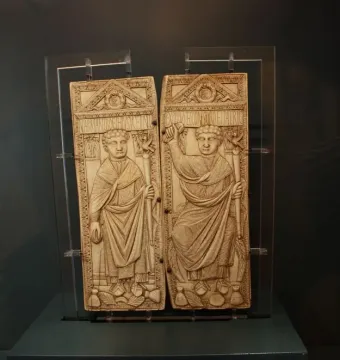
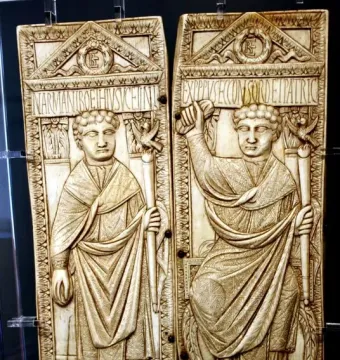
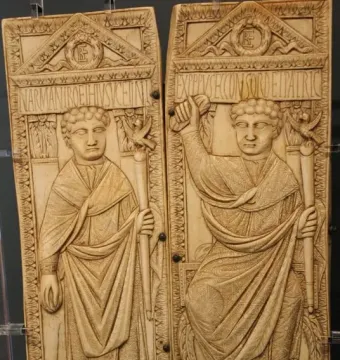
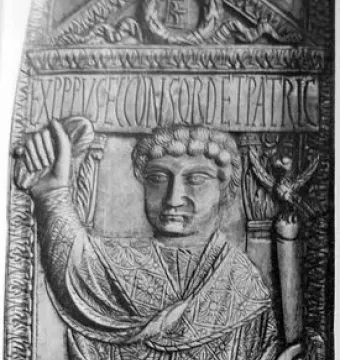
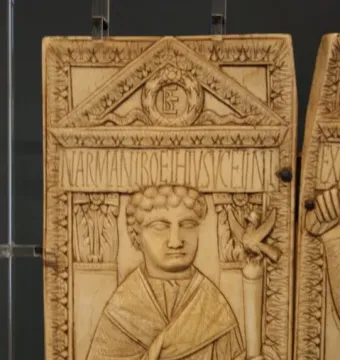
The Diptych of Boethius is an ivory consular diptych dating from the end of the fifth century AD and now conserved in the Museo di Santa Giulia in Brescia. It was acquired by Cardinal Angelo Maria Querini during the eighteenth century and later passed to the Museo dell'Era Cristiana through his will. The diptych depicts the consul on both panels, shown with a toga picta, a sceptre topped by an eagle and globe, and a mappa circensis used to open consul-sponsored games. Money bags at his feet emphasize his generosity. The inscriptions identify the person commemorated as Manlius Boethius and record the office and event being celebrated. The work also shows careful final carving with a burin to vary the relief and add fine decorative detail.
June 2011 © Giovanni Dall'Orto · Attribution
June 2011 © Giovanni Dall'Orto · Attribution
June 2011 © Giovanni Dall'Orto · Attribution
1909 © Ludwig von Sybel. · Public domain
June 2011 © Giovanni Dall'Orto · Attribution
Identification | |
| Title | Diptych of Boethius |
| Number of panels | Two |
| Type | late antique consular diptych |
| Alternative title | Dyptyk Boecjusza |
Historical context | |
| Date | 487 |
| Made for | Manlius Boethius, for his consulship and second appointment as praefectus urbi of Rome |
Creator | |
| Place of production | Rome |
| Made by | Roman workshops / Roman artisans |
Materials | |
| Material | Ivory |
Physical characteristics | |
| Dimensions | 35 × 12.6 cm |
Appearance | |
| Decoration | Each leaf has a pediment with a laurel wreath containing the monogram BOET; the panels are framed by a palmette border and set within an architectural frame of Corinthian pilasters, a frieze, and pediments |
| Depicted person | Manlius Boethius |
| Pose and attributes on first panel | Standing frontally and holding an ivory scepter topped with an eagle |
| Pose and attributes on second panel | Seated on a curule chair, holding a scepter and a mappa circensis, with money bags and palms at his feet |
| Clothing | ornamenta triumphalia, including the toga picta and tunica palmata, with geometric embroidery on the tunics |
Iconography and meaning | |
| Typical use | Consular diptychs were commonly given as gifts to friends and loved ones on important occasions, usually elections to public office |
| Language of inscriptions | Latin |
| Subject | Celebration of Manlius Boethius' consulship and second appointment as praefectus urbi |
| Function | Purely celebratory and commemorative object |
| Interpreted occasion | Probably the games of the Natalis Urbis on 21 April |
| Dedication inscription | NONIVS ARRIVS MANLIVS BOETHIVS VIR CLARISSIMVS ET ILLVSTRIS | EX PRAEFECTO PRAETORIO PRAEFECTVS VRBIS SECVNDO CONSVL ORDINARIVS ET PATRICIVS |
Technique | |
| Carving technique | Finely engraved with a burin |
History and restoration | |
| Back decoration | Paintings added in the 7th or 8th century |
| Back figures | Saint Augustine, Jerome, Gregory the Great, and the Raising of Lazarus |
| Museum history | First displayed in the Museo dell'Era Cristiana in rooms of the suppressed Monastery of Santa Giulia in the early 19th century; transferred to the Museo di Santa Giulia in 1998 |
Discovery and provenance | |
| Acquired by | Cardinal Angelo Maria Querini |
| Acquisition date | Early 18th century |
| Bequest | Bequeathed to the city of Brescia in 1755 |
Location and ownership | |
| Current location | Museo di Santa Giulia, Brescia |
| Museum collection | Querini Collection |
| Display location | Showcases dedicated to the Querini Collection in the Collecting and Applied Arts section |
Significance | |
| Historical status | Unknown to ancient artistic literature |