
La Danse
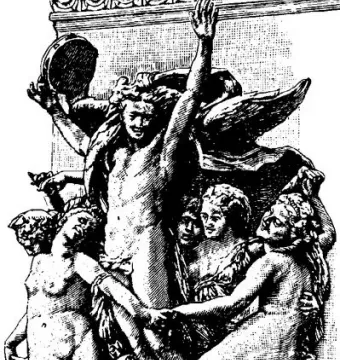
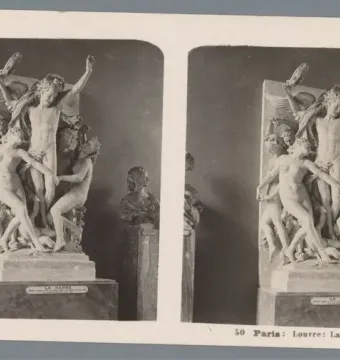
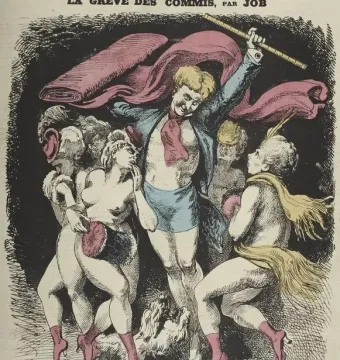
La Danse is an 1868 sculpture by the French artist Jean-Baptiste Carpeaux, made from Echaillon marble for the façade of the Opéra Garnier in Paris. One of four sculptural groups placed around the opera’s entrance, it was installed in 1869 and immediately criticised for its unashamed nakedness. The work was attacked with black ink in August 1869, and a replacement was later commissioned, though Carpeaux’s sculpture remained in place. To protect it from pollution, the original was moved to the Louvre Museum in 1964 and later transferred to the Musée d'Orsay in 1986, while a copy now stands on the opera façade.
· Public domain
1904 © Rijksmuseum · CC0
1869 © Job (Hadol) · Public domain
© Denis, Maurice (Granville, 25–11–1870 - Saint-Germain-en-Laye, 13–11–1943), peintre · CC0
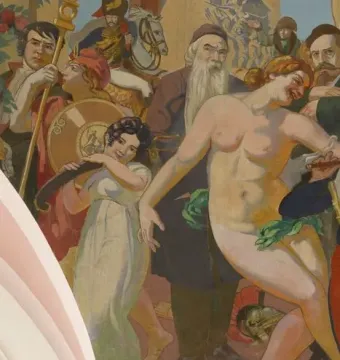
© Denis, Maurice (Granville, 25–11–1870 - Saint-Germain-en-Laye, 13–11–1943), peintre · CC0
Identification | |
| Title | La Danse |
| Alternative titles | La Danza; The Genius of Dance; The Spirit of Dance; Genius of Dance |
| Type | Sculptural group in high relief |
Historical context | |
| Date created | 1865–1869 |
| Commissioned | 1863, as one of four sculptures to decorate the façade of the Paris Opera (Palais Garnier) in Paris |
Creator | |
| Artist | Jean-Baptiste Carpeaux |
| Commissioner | Charles Garnier |
| Associated architect | Charles Garnier |
| Models used | Dancers and actresses from the Palais Royal |
| Preparation period | Carpeaux made numerous sketches over three years |
| Composition development | He settled on a rounded composition with several figures in 1867 |
Physical characteristics | |
| Style | Very realistic facial features, unlike idealized neoclassical sculpture |
| Figure treatment | The figures were intended to be nude |
| Other figures | A small cupid holding a jester-shaped rattle at the central figure's feet |
| Female figures | Five bacchantes dancing naked around the central figure |
| Central figure | A smiling young man with wings, standing upright and playing a tambourine |
| Base | A narrow pedestal |
| Composition | Five women form a joyful circle around a young man dancing and playing a tambourine |
| Number of figures | Six |
| Form | High-relief group |
Materials | |
| Material | Échaillon stone |
| Derived works material | Bronze |
Technique | |
| Technique | Stone carving |
Appearance | |
| Movement depicted | A lively dance captured in a single vivid moment |
| Hair and drapery | The young man's hair is blown by the wind, and a fluttering veil forms a backdrop behind him |
| Female figures' adornment | The bacchantes wear garlands of flowers or laurel |
| Female figures' pose | They hold hands and smile |
Iconography and meaning | |
| Central figure gender | Carpeaux was uncertain about the Genius of Dance's sex |
| Central figure smile model | Princess Hélène von Dönniges Racowitza modeled the smile |
| Central figure model | Sébastien Visat modeled the central figure's body |
| Artistic intention | To express movement and human moods |
| Influence | François Rude's The Departure of the Volunteers of 1792 influenced Carpeaux's approach to movement; Michelangelo influenced his sense of movement |
| Interpretation | A joyful dance associated with Bacchic and ancient mythological imagery |
| Subject | Dance; figures related to antiquity and allegory |
| Associated deity imagery | Wings behind the young man's shoulders link the work to the god of dance and to ancient myths |
Location and ownership | |
| Copy on façade | A copy by Paul Belmondo stands in the sculpture's original place on the façade of the Palais Garnier |
| Previous location of original | Louvre Museum |
| Bronze reproduction location | Virginia Museum of Fine Arts, French galleries |
| Current location of original | Musée d'Orsay |
| Original installation | Installed on the façade in 1869 |
| Original intended location | Façade of the Opéra Garnier (Paris Opera), Paris, on one of the side portals at ground level |
Discovery and provenance | |
| Work period | Carpeaux made sketches over three years before completing the model and stone version |
History and restoration | |
| Scandal subsided | After the outbreak of the Franco-Prussian War in July 1870 |
| Derived sculptures | Carpeaux later made bronze versions of the putto, the Genius of Dance, and the bacchantes reduced to three and renamed The Three Graces |
| Preservation | Tristan Esquiron devised a treatment that restored much of the stone's whiteness |
| Copy sculptor | Jean Juge |
| Copy made | A stone copy was made in 1963 |
| Relocated to the Musée d'Orsay | 1986 |
| Relocated to the Louvre | 1964, to protect it from atmospheric pollution and environmental erosion |
| Removal from façade | The original was removed from the façade after Carpeaux's death in 1875 |
| Public reception | Immediately and widely criticized as obscene, grotesque, and too realistic because of the nudity of the figures |
| Replacement plans | Charles Gumery was commissioned to make a replacement, but Carpeaux refused to make another version |
| Opposition to removal | The corps de ballet opposed moving it and petitioned against the plan |
| Proposed removal | The Opera considered moving the sculpture inside; Garnier also proposed moving it to the foyer de la danse |
| Reaction to vandalism | The attack provoked public indignation and support for Carpeaux and Garnier |
| Vandalism | Black ink was thrown over the sculpture on 26–28 August 1869 by an anonymous attacker |
| Unveiled | July 1869 |
| Stone version completed | 1869 |
| Completed model | 1868 |
Other | |
| Bronze reproduction | A 42-inch bronze cast reproduction of the Genius of Dance was acquired by the Virginia Museum of Fine Arts in 1983 |